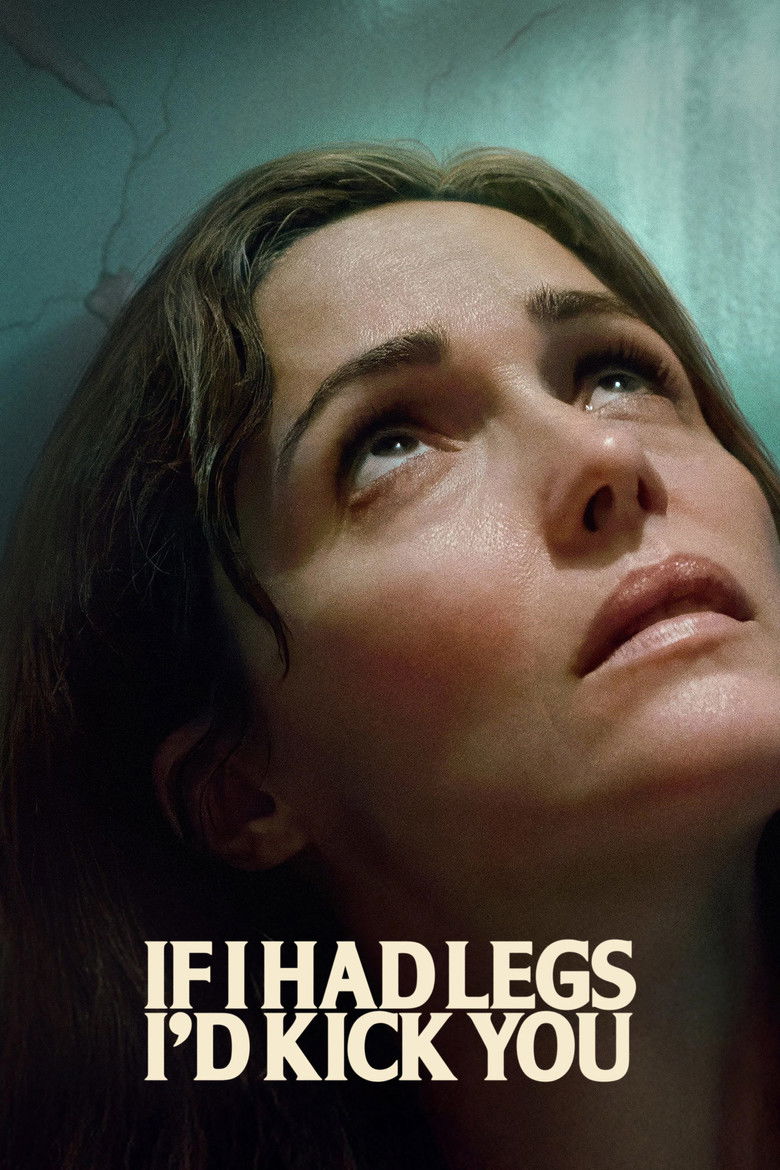

Linda is a therapist and mother caring for her sick young daughter. Her husband is away, her home is badly damaged, and a motel stay adds more pressure. She tries to help her patients while dealing with doctors, a missing person, and her own difficult therapist. The film uses tight close-ups, harsh sounds, dark jokes, and dreamlike horror to show Linda losing control. The main woke element is the film's repeated focus on motherhood as an identity that can erase a woman's older self. Linda questions whether she was meant to be a mother and struggles with guilt, anger, exhaustion, and the wish to escape. The film shows her husband, doctors, and therapists as distant or unable to help. This creates a clear but personal critique of care duties and social expectations rather than a broad political campaign.
Community feedback
Was our 44% Woke rating accurate?
Loading review details…
Breakdown
These are the editorial factors and ratings behind our score for If I Had Legs I'd Kick You.
Woke representation / casting
Not present. The cast fits a modern American family, medical, work, and motel setting. No diversity-first casting message or unusual identity pattern was found.
0%
Woke political dialogue
Not present. Linda discusses abortion, illness, therapy, work, and survival in personal terms. No activist speech about gender policy, race, DEI, or politics was confirmed.
0%
Identity-driven story themes
Linda repeatedly says she was not meant to be a mother and feels her old self disappear under nonstop care. The film keeps her daughter mostly off camera and puts the audience inside Linda’s guilt, anger, and fear. Her talk about a past abortion and the pressure placed on mothers gives the story a clear female-identity focus. The film stays centered on one woman’s crisis rather than calling for a movement or policy change.
47%
Western institutional / cultural critique
The film shows Linda's husband, doctors, therapists, and care workers as distant, blaming, or unable to help. The story questions the belief that mothers should manage every crisis alone. The critique remains personal and does not clearly attack capitalism, patriarchy, religion, or conservative politics.
38%
Woke character or canon changes
Not relevant. The film is an original story with no established characters, source canon, or historical figures changed for identity reasons.
0%
Anti-woke backlash and complaints
A handful of small X accounts called the film anti-natalist or anti-motherhood propaganda. Those complaints had little reach and did not lead to a boycott or review-bombing campaign. Armond White's feminist-resentment comment was not a clear DEI or identity-politics complaint.
12%
Creator track record context
Mary Bronstein has a record of feminist writing and films about difficult women, female friendship, and motherhood. Rose Byrne has supported gender equality and female-led production. The other listed creators show mostly low or mild activist context.
42%
Production
Movie · 2016
WWII American Army Medic Desmond T. Doss, who served during the Battle of Okinawa, refuses to kill people and becomes the first Conscientious Objector in American history to…

Movie · 2022
London, 1953. Mr. Williams, a veteran civil servant, is an important cog within the city's bureaucracy as it struggles to rebuild in the aftermath of World War II.

Movie · 2017
Members of the Granite Mountain Hotshots battle deadly wildfires to save an Arizona town.
Movie · 2025
Diagnosed with Tourette Syndrome at 15, John Davidson navigates his way against the odds through troubled teenage years and into adulthood, finding inspiration in the kindness of…
Movie · 2023
The story of J. Robert Oppenheimer's role in the development of the atomic bomb during World War II.

Movie · 2016
After his older brother passes away, Lee Chandler is forced to return home to care for his 16-year-old nephew.

Movie · 2021
Two couples meet for a painful and raw conversation in the aftermath of a violent tragedy.
Movie · 2022
An epic journey of friendship and self-discovery set in the breathtaking Italian Alps, The Eight Mountains follows over four decades the profound, complex relationship between…
