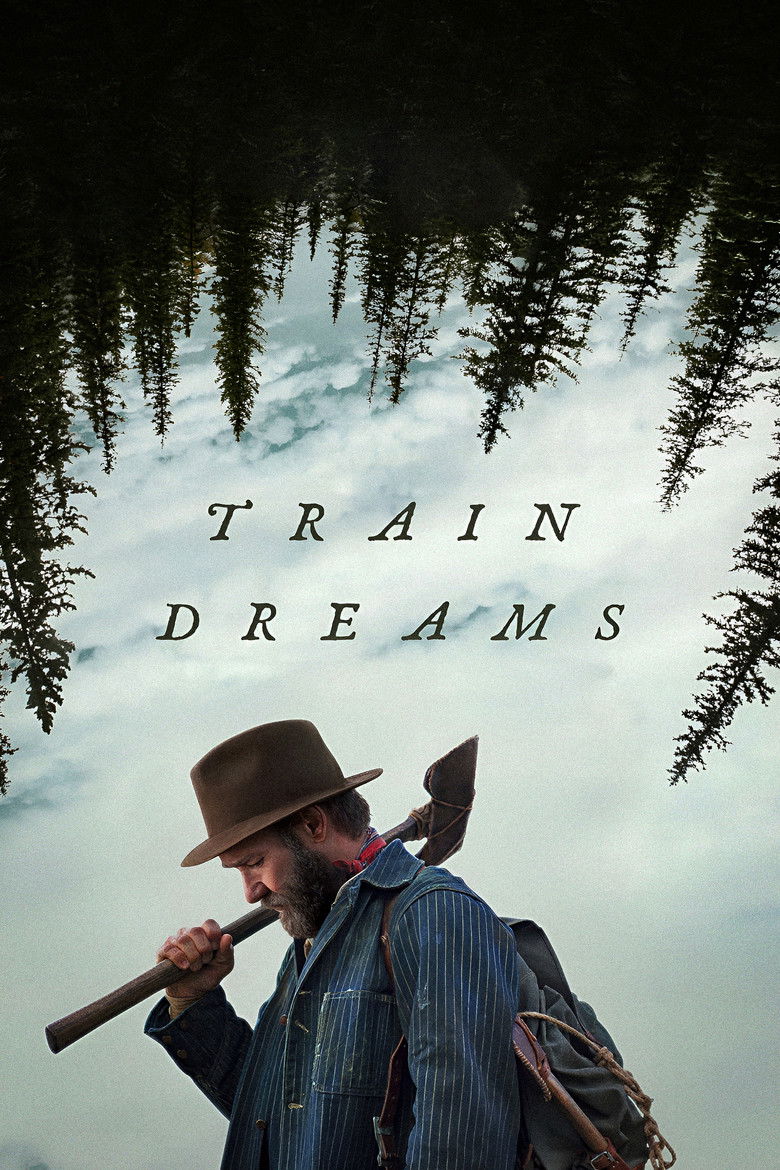

Robert Grainier grows up alone in northern Idaho and earns his living cutting trees and building railroads in the early 1900s. Long jobs keep him away from his wife, Gladys, and their daughter, Kate, but the family builds a small home beside the forest. A wildfire destroys that home and takes Gladys and Kate while Robert is away. The film follows his grief and old age as trains, machines, and towns change the land around him. Several brief scenes show Chinese families forced from town and a Chinese railroad worker killed by a mob. Robert asks what the worker did, and the dead man’s face returns in his memories. A black man kills a white worker who had murdered his brother because of his race. Gladys begins her courtship with Robert, while Claire lives and works alone in a forest fire lookout. These moments sit inside a story mainly about Robert’s family, grief, work, and the passage of time.
Community feedback
Was our 37% Woke rating accurate?
Loading review details…
Breakdown
These are the editorial factors and ratings behind our score for Train Dreams.
Woke representation / casting
Not present. Robert, Gladys, and their daughter lead the story, while Chinese, Black, and Indigenous characters appear in brief period stories.
0%
Woke political dialogue
The narrator calls the forced removal of Chinese families a mass deportation and says Robert is troubled by the violence. Robert asks what the Chinese worker did, and the loggers say they do not know. A black man says a white worker killed his brother because of his race before shooting him. The narrator notes that Gladys approaches Robert as if women did that every day.
24%
Identity-driven story themes
Robert watches white loggers take a Chinese worker and kill him without naming a reason. The narrator recalls Chinese families being forced out of town, and the dead worker returns in Robert’s memories. A black man kills a white worker who murdered his brother because of his race. Gladys begins her relationship with Robert, and Claire works alone at a forest lookout in a job praised as unusually brave for a woman.
27%
Western institutional / cultural critique
Town officials force Chinese families out, and a mob kills a Chinese railroad worker. Robert questions the killing, and the worker stays in his memories. Edgerton and Kwedar link the story to the current treatment of immigrants.
18%
Woke character or canon changes
The novella shows Claire as a widowed mother traveling with two children. The film makes her a Forest Service worker who lives alone at a fire lookout. A letter praises her for lacking the timidity expected of women. The film gives this secondary character a traditionally male work role.
8%
Anti-woke backlash and complaints
Movieguide called the film’s racial scenes politically correct anti-Christian history. Picturesuite Studios accused it of using deportation and race stories to push woke propaganda. Small X accounts objected to the deportation narration and Claire’s fire lookout job.
36%
Creator track record context
Clint Bentley’s stored score is 26, and his profile lists no woke history. Greg Kwedar’s stored score is 36, and his past work focused on people in prison and equal pay. Avy Kaufman’s stored score is 46, based on casting for queer-focused and identity-driven stories. Most listed producers have scores from 24 to 32 or no stored woke history.
32%
Production

Movie · 2016
A five-year-old Indian boy gets lost on the streets of Calcutta, thousands of kilometers from home. He survives many challenges before being adopted by a couple in Australia; 25…

Movie · 2021
Two couples meet for a painful and raw conversation in the aftermath of a violent tragedy.
Movie · 2016
In a desolate war zone where screams of the innocent echo, on the very line between disaster and valor, 7 Maroon Berets will dance with death.

Movie · 2017
In 1950, amidst the ravages of the Korean War, Sergeant Süleyman stumbles upon a a half-frozen little girl, with no parents and no help in sight and he risks his own life to save…

Movie · 2024
M, a university dropout low on money and luck, volunteers to take care of his terminally ill grandmother, in the hope of pocketing an inheritance.

Movie · 2022
Based on the true nail-biting mission that captivated the world. Twelve boys and the coach of a Thai soccer team explore the Tham Luang cave when an unexpected rainstorm traps…

Movie · 2017
Members of the Granite Mountain Hotshots battle deadly wildfires to save an Arizona town.
Movie · 2020
A man refuses all assistance from his daughter as he ages and, as he tries to make sense of his changing circumstances, he begins to doubt his loved ones, his own mind and even…
