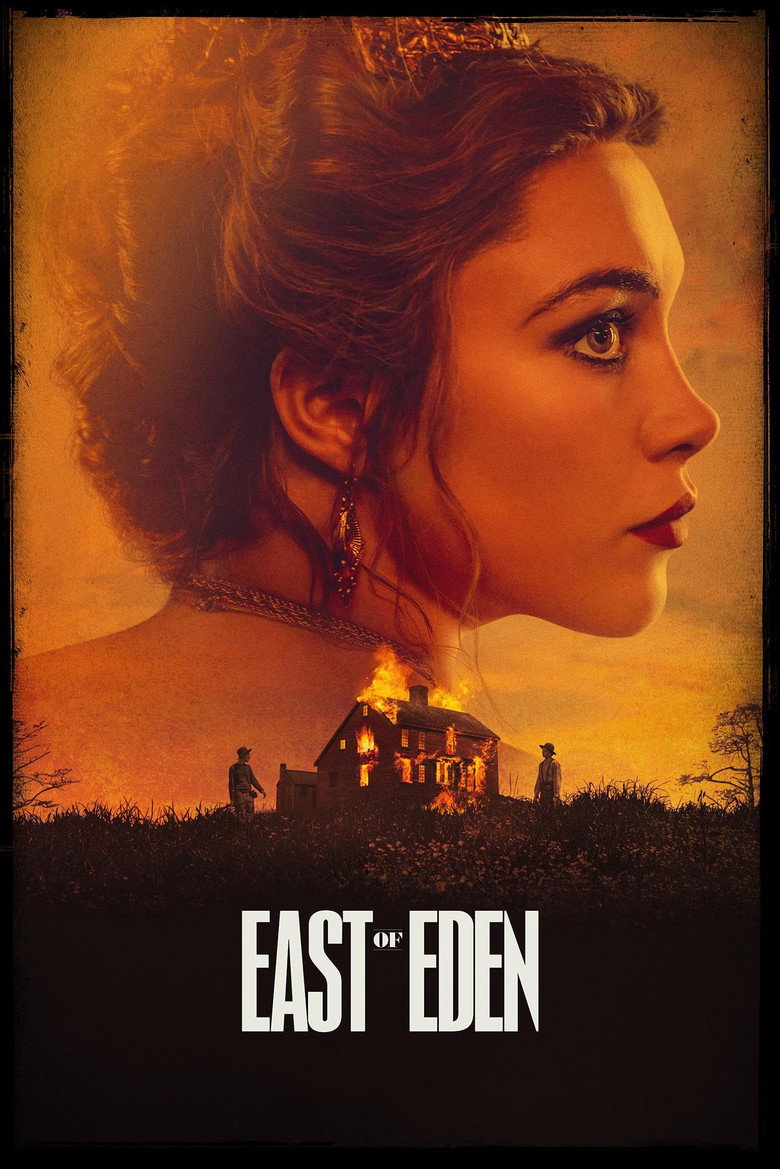

2026 · Based on 1 season, 7 episodes through October 1, 2026 ·
Cathy Ames enters the lives of brothers Adam and Charles Trask after a violent attack leaves her badly hurt. Adam falls in love with her, while Charles suspects that she is hiding dangerous secrets. Their story moves from Connecticut to California around the start of the 1900s. Cathy’s choices leave lasting wounds, and Adam’s twin sons face another bitter struggle for their father’s love. The series gives Cathy’s childhood abuse a major role in explaining her cruelty and distrust of men. Her unwanted pregnancy and rejection of family life make women’s freedom over their bodies a clear concern. Cathy also protects another brothel worker from an abusive customer, even as she plans harm against people who help her. Lee faces racist barriers when he tries to build an independent life in San Francisco. These themes shape several episodes, but Cathy’s murders and the final family tragedy still stress the damage that people cause through their own choices.
Community feedback
Was our 75% Woke rating accurate?
Loading review details…
Breakdown
These are the editorial factors and ratings behind our score for East of Eden.
Woke representation / casting
Not present. The main cast follows the characters’ established backgrounds.
0%
Woke political dialogue
Not present. The confirmed lines concern personal choices, family conflict, and prejudice within the period setting.
0%
Identity-driven story themes
Cathy’s expanded story links her distrust of men to sexual abuse and the limits placed on women. Cathy protects a fellow brothel worker after a customer hurts her. Jeb Stuart frames Cathy’s struggle as a woman seeking freedom from a life defined by a man. Lee’s later storyline also shows a Chinese American man facing racist barriers from white property owners.
48%
Western institutional / cultural critique
Cathy’s unwanted pregnancy and rejection of marriage place women’s control over their lives at the center of her story. The series connects her cruelty to abuse and pressure to accept motherhood. Pugh links this story to present-day threats to women’s control over their bodies. The adaptation’s feminist framing asks viewers to understand Cathy partly as someone damaged by male control and traditional expectations.
55%
Woke character or canon changes
The adaptation expands Cathy’s childhood trauma and makes her view of events a major part of the story. The change adds a feminist explanation to a character introduced in the book as a born monster. Stuart says the series explores women’s lack of freedom and Cathy’s need to escape a life defined by men. The series also expands Lee’s brief stay in San Francisco into a visible struggle against racial discrimination.
68%
Anti-woke backlash and complaints
Viewers on X and Reddit accused the adaptation of turning Cathy into a girlboss and blaming men for her crimes. The supplied X report records repeated complaints with substantial view counts. Republican communicator Matt Whitlock called it a feminist rewrite that excuses Cathy through male mistreatment. TheWrap addressed the girlboss accusation directly, bringing the complaint into national entertainment coverage.
62%
Creator track record context
Zoe Kazan’s stored record includes criticism of gender inequality and support for more varied roles for women. Florence Pugh’s stored record includes challenges to body-shaming and gendered judgment. Laure de Clermont-Tonnerre’s stored record stresses the female gaze and freedom from patriarchal limits. Alexander Chee’s stored record includes queer activism and identity-focused writing, while Kazan and Pugh’s gender concerns closely match this adaptation’s framing.
58%
Production

TV Show · 2022
This sweeping saga chronicles the hopes and dreams of a Korean immigrant family across four generations as they leave their homeland in an indomitable quest to survive and thrive.

TV Show · 2024
The true story of one Jewish family separated at the start of World War II, determined to survive—and to reunite.
TV Show · 2024
The powerful real-life story of Lali Sokolov, a Jewish prisoner who was tasked with tattooing ID numbers on prisoners' arms in the Auschwitz-Birkenau concentration camp during…
TV Show · 2021
After fleeing an abusive relationship, a young mother finds a job cleaning houses as she fights to provide for her child and build them a better future.
TV Show · 2019
In the 1960s, Israeli clerk-turned-secret agent Eli Cohen goes deep undercover inside Syria on a perilous, years-long mission to spy for Mossad.

TV Show · 2016
In 1977 New York City, the talented and soulful youth of the South Bronx chase dreams and breakneck beats to transform music history.
TV Show · 2026
Rip Wheeler and Beth Dutton gamble everything on a new life in South Texas, but the promise of building a future far from the ghosts of Yellowstone quickly collides with brutal…
TV Show · 2022
Oscar-winning producer Al Ruddy’s never before revealed experiences of making the iconic 1972 film The Godfather that Francis Ford Coppola directed and adapted with Mario Puzo.
