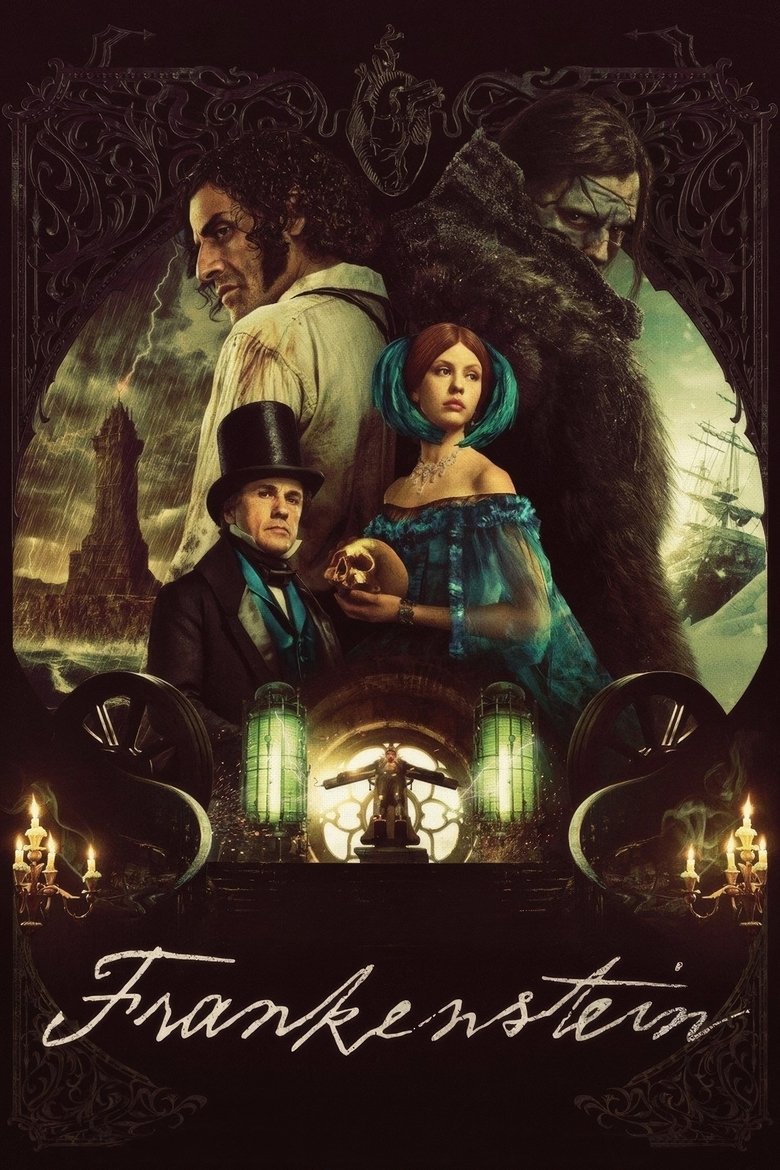

Victor Frankenstein grows up in a wealthy European family with a cruel surgeon for a father. As an adult, he steals human remains and uses new science to bring a Creature to life. Victor rejects the being, who survives attacks and sets out to find his maker. The story moves from Victor’s childhood to a frozen Arctic ship, with a dark tone and a long focus on family pain. The Creature is shown as confused and gentle, but people attack him because of his strange body. Elizabeth sees him as a person and tries to protect him. Victor’s father is cruel to Victor, and Victor repeats that cruelty toward the Creature. The film asks viewers to pity the outcast and blame harsh father figures, tying rejection and authority to the main family drama.
Community feedback
Was our 53% Woke rating accurate?
Loading review details…
Breakdown
These are the editorial factors and ratings behind our score for Frankenstein.
Woke representation / casting
Guatemalan-born Oscar Isaac plays Victor, the brilliant scientist at the center of the film. Del Toro says Isaac’s name is no accident and calls the film a Latin American view of a European story. The director describes the casting as reclaiming Victor for a non-Anglo actor.
27%
Woke political dialogue
Not present. The spoken lines focus on science, grief, family, and war.
0%
Identity-driven story themes
Victor treats the Creature as a thing, and people attack him because of his appearance. Elizabeth recognizes the Creature as a person and protects him. Del Toro and Isaac connect the story to their own feelings of being outsiders. Rejection and the need to belong shape the Creature’s story.
28%
Western institutional / cultural critique
Victor’s father controls his childhood and punishes him for mistakes. Victor later rejects the Creature and repeats the harm he suffered. Del Toro and Isaac describe the father-son story as shaped by strong patriarchal family roles. Elizabeth questions war ideals because ordinary men die while those who direct the war stay safe.
29%
Woke character or canon changes
The film gives Victor dark hair and eyes, and says his father despises those features in Victor and his mother. The Creature takes more of the moral center, while Victor becomes the figure judged as the monster. Del Toro connects the outsider story to his and Isaac’s Latin American experience.
28%
Anti-woke backlash and complaints
A national conservative outlet published an opinion article calling the film a woke story about a rejected Creature and an oppressive father. The writer said Victor becomes the real monster while the Creature becomes a victim. A few low-reach X posts called the story feminist or “woke lite,” with little engagement.
60%
Creator track record context
Del Toro has said Pacific Rim should represent every gender and race. He described Crimson Peak as empowering women and has spoken against anti-immigrant rhetoric. Producers Stuber and Dale have supported inclusion programs. Mary Shelley’s listed score is 80, and her profile says she has no woke history.
49%
Production

Movie · 2025
In this extraordinary story of an ordinary man, Charles 'Chuck' Krantz experiences the wonder of love, the heartbreak of loss, and the multitudes contained in all of us.

Movie · 2021
Four children become friends during the summer holidays, and out of sight of the adults they discover they have hidden powers.

Movie · 2022
In the wake of a young Jewish girl’s disappearance, the son of a Hasidic funeral director returns home with his pregnant wife in hopes of reconciling with his father.

Movie · 2022
Known as America’s Poet, Henry Wadsworth Longfellow leads an idyllic life – until the day his world is shattered by tragedy.
Movie · 2018
Professor Philip Goodman devotes his life to exposing phony psychics and fraudulent supernatural shenanigans.

Movie · 2024
A mother and her teenage daughter must confront Death when it arrives in the form of an astonishing talking bird.

Movie · 2024
A gothic tale of obsession between a haunted young woman and the terrifying vampire infatuated with her, causing untold horror in its wake.
Movie · 2023
On the day of his scheduled execution, a convicted serial killer gets a psychiatric evaluation during which he claims he is a demon, and further claims that before their time is…
