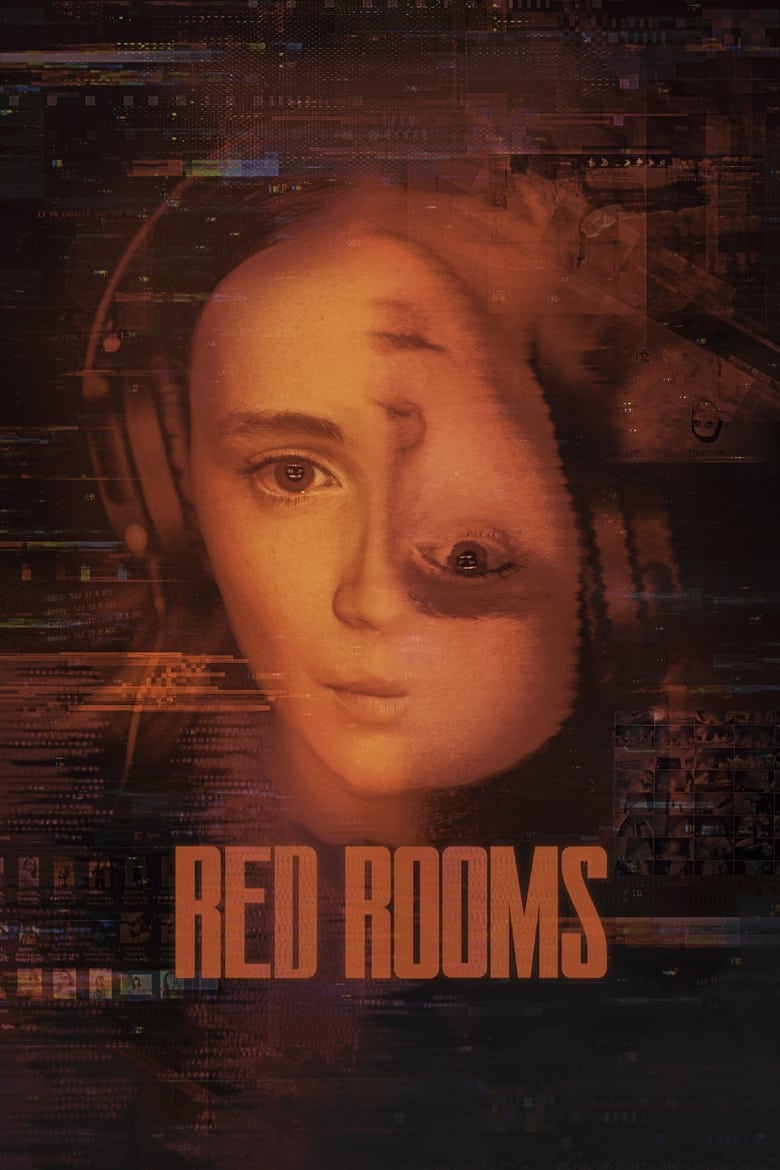

Kelly-Anne is a young fashion model who spends her nights online and her mornings outside a Montreal courthouse. She follows the trial of Ludovic Chevalier, a quiet man accused of killing three teenage girls and selling videos of the crimes on the dark web. Kelly-Anne meets Clémentine, another follower who thinks Chevalier may be innocent, and their friendship pulls Kelly-Anne deeper into the case. The film is a cold, slow thriller about obsession, loneliness, and the fear of seeing too much.
The film puts two women at the center of a story about people who become fascinated with violent men. Kelly-Anne is rich, highly skilled with computers and poker, and able to push the case forward while the male killer stays mostly silent. Her power does not make her a hero, because the story shows her as selfish, cruel, and drawn to danger. The film also questions how courts, television, and online viewers turn the suffering of girls and their families into public entertainment, but it does not turn that concern into a political speech.
Community feedback
Was our 40% Woke rating accurate?
Loading review details…
Breakdown
These are the editorial factors and ratings behind our score for Red Rooms.
Woke representation / casting
The film places two women, Kelly-Anne and Clémentine, at the center of a story often told through male killers, police, or detectives. The choice makes female fascination with a male killer a visible part of the premise. The film also gives women major roles in the case, including the prosecutor and the tech-skilled lead. The casting fits modern Montreal and is not presented as a broad diversity campaign.
32%
Woke political dialogue
Not present. The film has courtroom and television talk about the killings, the trial, and online violence. It does not include identity, DEI, or activist speeches.
0%
Identity-driven story themes
The film makes women’s relationship to violent men the central subject. Kelly-Anne and Clémentine drive the action, while the male killer stays mostly silent and behind glass. Kelly-Anne is rich, highly skilled online, and able to outplay people around her, but the film presents her as cold and disturbing rather than as a model of female power. The story questions why people, including women, turn killers and victims into entertainment.
42%
Western institutional / cultural critique
Not present. The film criticizes true-crime media and online spectators, but it does not frame Western institutions, family, Christianity, capitalism, or traditional gender roles through a modern activist lens.
0%
Woke character or canon changes
Not relevant. The film uses a fictional killer and fictional trial in Montreal, even though its idea was inspired by real crime coverage.
0%
Anti-woke backlash and complaints
One small X account called the film tedious feminist make-believe and said it excuses women who love criminals. The post had about 37 views and no replies. Searches found no sustained anti-woke campaign, review bombing, boycott, or major outlet framing the film as woke. Most visible reaction praised the thriller or debated Kelly-Anne’s motives, so the complaint is fringe and unsubstantiated.
5%
Creator track record context
Pascal Plante has a moderate representation-oriented record, especially through Nadia, Butterfly and his interest in women’s experiences. Dominique Dussault often supports strong women-led stories and has praised complex female characters. Tim Ringuette has backed varied Canadian films but has no clear activist profile. Marilou Richer has no documented identity-driven public profile. Together these people give the project moderate creator context, not a strong partisan or culture-war signal.
48%
Production

Movie · 2021
Ten years after he was last seen, a vicious mob enforcer returns home to find his son and methodically track down the gang that double-crossed him.
Movie · 2026
After a criminal network kidnaps Wang Wei's daughter and the corrupt police refuse to assist him, Wei sets out on his own to locate her.
Movie · 2023
A small, wealthy family in New York City gets progressively torn apart by secrets, lies, and the theft that orchestrates all of it.
Movie · 2017
After working as a drug courier and getting into a brutal shootout with police, a former boxer finds himself at the mercy of his enemies as they force him to instigate violent…
Movie · 2016
As a math savant uncooks the books for a new client, the Treasury Department closes in on his activities and the body count starts to rise.
Movie · 2026
As rival gangs, corrupt officials and a ruthless Major Iqbal close in, Hamza's mission for his country spirals into a bloody personal war where the line between patriot and…

Movie · 2023
After a fateful miss, an assassin battles his employers, and himself, on an international manhunt he insists isn't personal.

Movie · 2025
Taking place during the events of John Wick: Chapter 3 – Parabellum, Eve Macarro begins her training in the assassin traditions of the Ruska Roma.
