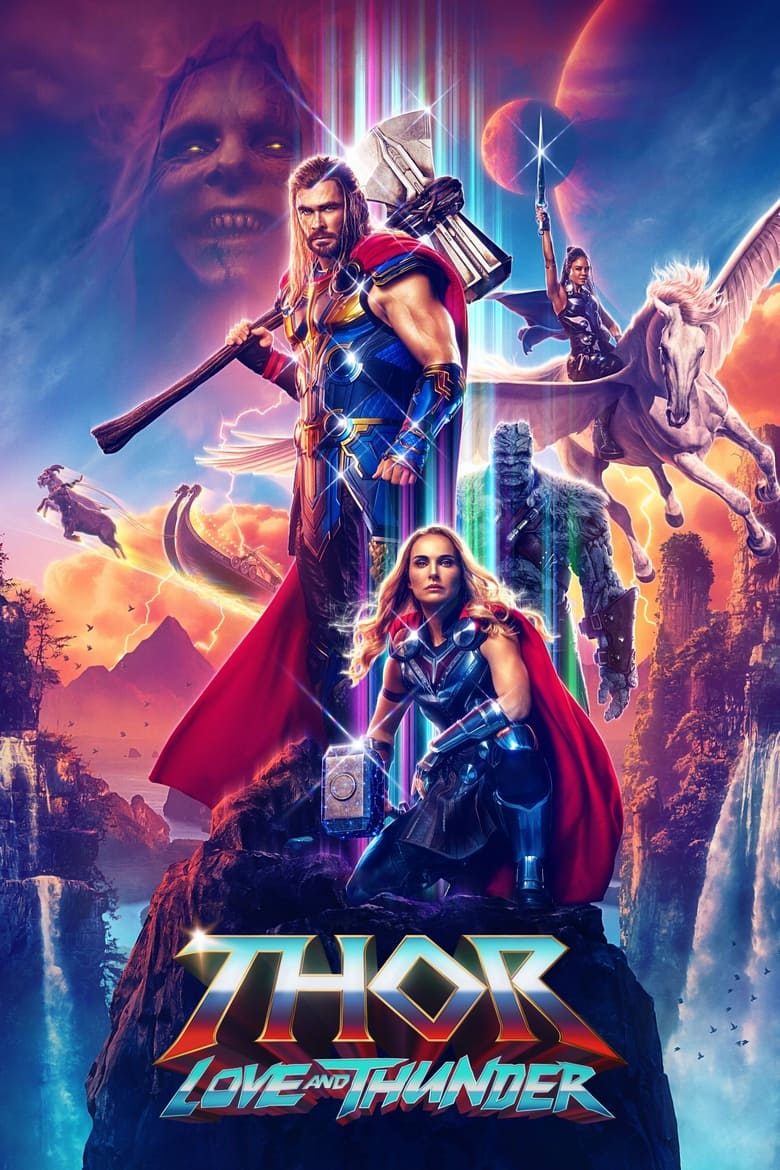

Thor is a god who has spent years fighting and is trying to rest after losing people he loved. His break ends when Gorr starts killing gods after the god he served ignores his dying daughter. Thor joins King Valkyrie, Korg, and Jane Foster to stop Gorr from reaching a place where he can erase every god. Their trip runs through New Asgard and a city where gods meet, and the film tells the adventure with loud jokes, bright battles, and moments about grief and love. Jane has cancer, and Mjolnir gives her Thor’s powers even as each change into the Mighty Thor drains her strength. Her story becomes a major hero arc, and she chooses to keep fighting although it shortens her life. Valkyrie refers to the woman she once loved, and Korg says two male Kronans can make a child by holding hands over lava. These LGBTQ moments join the story’s themes of love and loss, and Jane’s role gives a woman a major place in a superhero story.
Community feedback
Was our 73% Woke rating accurate?
Loading review details…
Breakdown
These are the editorial factors and ratings behind our score for Thor: Love and Thunder.
Woke representation / casting
Tessa Thompson plays Valkyrie, a black woman who rules a kingdom drawn from Norse stories. Natalie Portman plays Jane as the Mighty Thor, so the hero group includes two women in major leadership and battle roles. Casting director Sarah Halley Finn said Marvel deliberately changed some characters to increase racial and gender representation, and she named Valkyrie as an example.
40%
Woke political dialogue
Gorr calls Jane “Lady Thor” during the final fight. Jane answers, “First off, the name is Mighty Thor.” The exchange gives her a distinct title in a short scene.
19%
Identity-driven story themes
Jane takes on the Thor role while she battles cancer. She keeps fighting as the Mighty Thor even though Mjolnir worsens her illness. Valkyrie talks about losing her girlfriend, and Korg tells of his two dads and male partner. The film treats these relationships as part of its heroes’ lives and gives Jane a major heroic arc.
54%
Western institutional / cultural critique
Not present. Zeus acts vainly, and Thor risks himself to save people.
0%
Woke character or canon changes
Jane Foster changes from Thor’s former girlfriend and human scientist into the Mighty Thor with Mjolnir. The film keeps Thor Odinson beside her and adds a woman to his heroic mantle. Marvel’s comics already gave Jane the Thor role, and the film brings that identity change to the MCU.
40%
Anti-woke backlash and complaints
Breitbart columnist John Nolte called the film “kinda woke” and criticized its LGBTQ scene and Jane’s title. One Million Moms called for a boycott over LGBTQ content. An Indian Express opinion piece blamed Disney’s “woke culture” for Phase Four’s decline and named this film. Political voices on X also complained about the same themes.
63%
Creator track record context
Taika Waititi scored 64/100 in the stored profile, which notes his anti-racism and LGBTQ work. Jennifer Kaytin Robinson scored 65/100 and has made female-led stories with empowerment and queer themes. Producer Victoria Alonso scored 60/100 and has backed diversity and LGBTQ representation.
63%
Production

Movie · 2024
After Santa Claus (codename: Red One) is kidnapped, the North Pole's Head of Security must team up with the world's most infamous tracker in a globe-trotting, action-packed…
Movie · 2019
A boy is given the ability to become an adult superhero in times of need with a single magic word.

Movie · 2022
When a team of mercenaries breaks into a wealthy family compound on Christmas Eve, taking everyone inside hostage, the team isn’t prepared for a surprise combatant: Santa Claus is…
Movie · 2021
Determined to ensure Superman's ultimate sacrifice was not in vain, Bruce Wayne aligns forces with Diana Prince with plans to recruit a team of metahumans to protect the world…

Movie · 2024
After a family tragedy, three generations of the Deetz family return home to Winter River. Still haunted by Betelgeuse, Lydia's life is turned upside down when her teenage…

Movie · 2020
Tanjiro Kamado, joined with Inosuke Hashibira, a boy raised by boars who wears a boar's head, and Zenitsu Agatsuma, a scared boy who reveals his true power when he sleeps, boards…

Movie · 2022
Prince Amleth is on the verge of becoming a man when his father is brutally murdered by his uncle, who kidnaps the boy's mother.

Movie · 2023
Hapless family man Paul Matthews finds his life turned upside down when millions of strangers suddenly start seeing him in their dreams.
