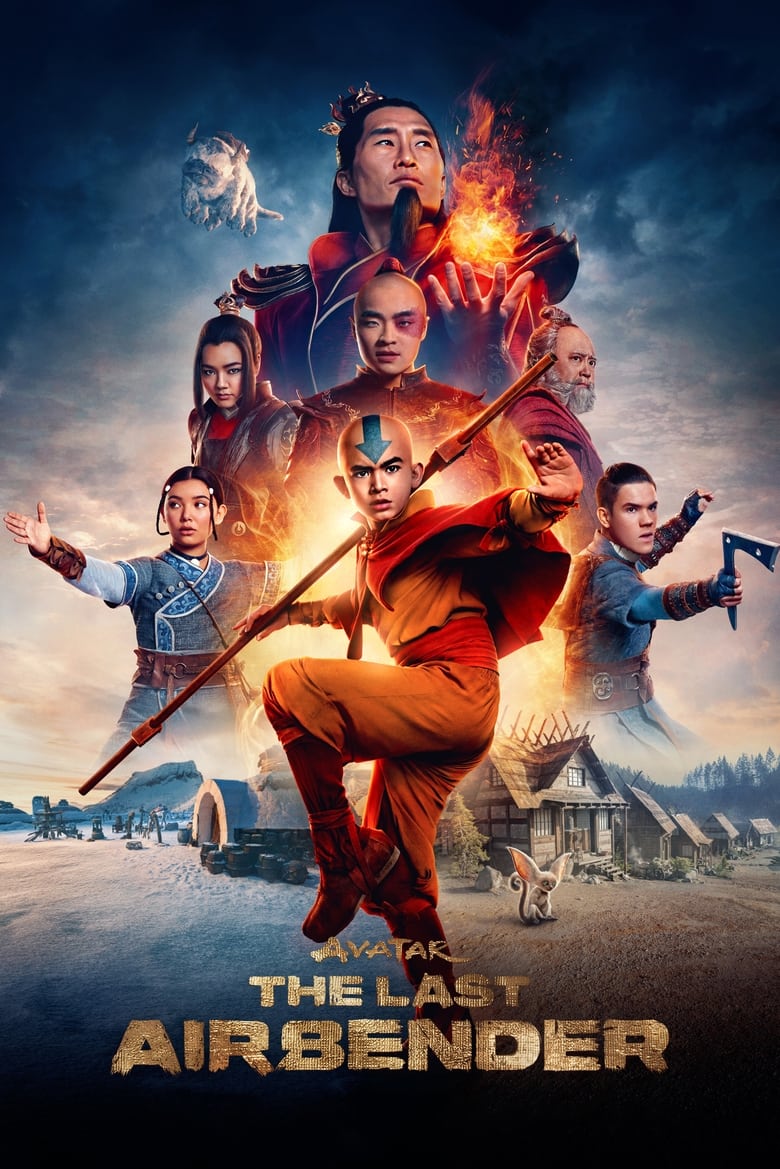

2024– · Based on 1 season, 8 episodes through February 22, 2024 ·
Aang is a young Air Nomad who learns that he is the Avatar, the only person who can control all four elements. The Fire Nation has attacked the other nations for a century and destroyed the Air Nomads. Aang travels with Katara and Sokka while Prince Zuko hunts him. The show combines fantasy action, war drama, humor, and serious family stories. The show uses Asian and Indigenous-inspired casting that fits its fictional world. Female characters take strong roles as fighters, leaders, and teachers, while Sokka’s early sexism becomes less clear. The founders of Omashu become two women in a same-sex love story. These choices are easy to see, but the main story still focuses on war, duty, family, tyranny, and personal growth.
Community feedback
Was our 59% Woke rating accurate?
Loading review details…
Breakdown
These are the editorial factors and ratings behind our score for Avatar the Last Airbender.
Woke representation / casting
The main cast uses Asian and Indigenous-inspired actors for nations based on Asian and Indigenous cultures. The casting fits the story world instead of creating a modern mixed group. Netflix and Albert Kim also presented the casting as important representation. That public goal adds a mild score even though the casting itself is mostly setting-appropriate.
18%
Woke political dialogue
The show includes brief arguments about sexism and women’s roles. The Northern Water Tribe limits women’s waterbending training, and Katara challenges that rule. Sokka’s sexist lines from the cartoon are mostly softened or removed. The dialogue does not often use modern activist language.
22%
Identity-driven story themes
Female characters repeatedly prove their skill as fighters, leaders, and teachers. Katara challenges limits placed on women, and Toph challenges her family’s view of her blindness and abilities. Oma and Shu are shown as two women in a forbidden love story. These themes recur, but war and personal growth remain more important.
38%
Western institutional / cultural critique
The show criticizes traditional gender roles through Katara, Suki, and the Northern Water Tribe. The Fire Nation and Ba Sing Se are criticized for conquest, secrecy, and tyranny. Those conflicts belong to the fantasy world and do not become a sustained attack on Western institutions, capitalism, Christianity, or conservative culture.
16%
Woke character or canon changes
Netflix changes Oma and Shu from a man and woman into two women. The series also removes much of Sokka’s early sexism, which changes his original growth path. Katara’s gender conflict is reshaped, while ordinary plot cuts and story compression do not add to this score. These are clear identity-related changes to established material.
58%
Anti-woke backlash and complaints
Viewers repeatedly called the removal of Sokka’s sexism woke sanitizing and said male characters were weakened for a feminist remake. The complaint appeared across social media and received coverage from named outlets including Entertainment Weekly, TV Guide, and TheWrap. Complaints about Oma and Shu and season 2 gender changes were smaller. No organized boycott or national news cycle was found.
46%
Creator track record context
Albert Kim has a documented focus on Asian representation and diverse creative voices. Dan Lin and Ryan Halprin have repeated links to representation-first hiring and cultural programs. Roseanne Liang and Helen Shang add some identity-focused context. Other key creators have limited public evidence of activism, so the overall signal is moderate.
45%
Production

TV Show · 2019
The life of Christ through the eyes of those who encountered him.
TV Show · 2022
Journey into the lives of two distinctly different Jedi from the prequel era – Ahsoka Tano and Count Dooku. Each will be put to the test as they make choices that will define…

TV Show · 2025
A Librarian from the past time travels to the present and finds himself stuck here. When he returns to his castle, which is now a museum, he inadvertently releases magic across…

TV Show · 2025
Two outlaws must navigate the galaxy's dangerous underworld as they chart their destinies.

TV Show · 2024
A journey into the fearsome Galactic Empire through the eyes of two warriors on divergent paths.
TV Show · 2020
Merlin’s apprentice joins Arcadia’s heroes on a time-bending adventure in Camelot, where conflict is brewing between the human, troll and magical worlds.
TV Show · 2021
The 'Bad Batch' of elite and experimental clones make their way through an ever-changing galaxy in the immediate aftermath of the Clone Wars.
TV Show · 2022
When an explosive battle with Dr. Eggman shatters the universe, Sonic races through parallel dimensions to reconnect with his friends and save the world.
