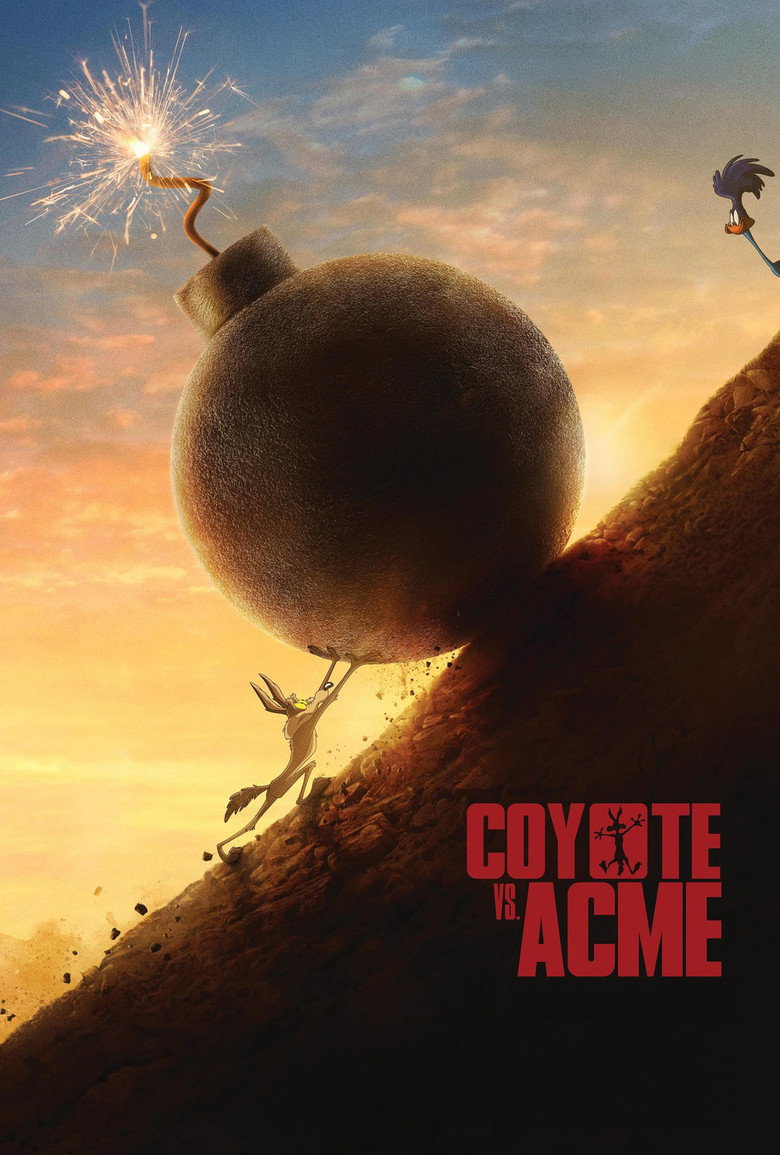

Wile E. Coyote has spent years buying Acme gear to catch the Road Runner, but each tool fails and leaves him hurt. He hires Kevin Avery, a struggling Albuquerque injury lawyer, to sue Acme. Kevin and Wile E. face Buddy Crane, Acme’s sharp lawyer, as the case moves from a local courtroom to Washington. The film mixes live action, cartoon slapstick, legal jokes, and warm underdog humor. The trial shows Acme as a monopoly that controls the goods cartoon characters need and hides a plan to test products on them. Kevin’s law intern niece, Paige, helps uncover that plan and urges him to keep fighting. Kevin’s growing loyalty to Wile E. changes the case from a payout attempt into a public fight over Acme’s power. Wile E. and the Road Runner’s old chase also becomes a friendship story.
Community feedback
Was our 33% Woke rating accurate?
Loading review details…
Breakdown
These are the editorial factors and ratings behind our score for Coyote vs. Acme.
Woke representation / casting
Not present. The cast includes people from several backgrounds, while their backgrounds do not drive the lawsuit.
0%
Woke political dialogue
Paige says she chose a small law firm rather than help rich clients get richer. Kevin later tells reporters that companies think they can do whatever they want and says the public is sick of it. Kevin turns that line into a public call to fight corporate power.
14%
Identity-driven story themes
Paige takes an active role in the legal fight as a young woman law intern and pushes her male uncle to keep going. Paige helps plan the case and investigate Project Sisyphus while Kevin repeatedly tries to settle or quit. The ending makes Paige a partner in the firm.
15%
Western institutional / cultural critique
Acme controls the tools Wile E. needs and sells products to people and cartoon characters. Acme leaders hide Project Sisyphus, which uses cartoon customers to test products. Kevin says companies think they can do anything because they can, then calls for people to stop them. The film moves the case to Congress after Judge Trapa Grosso dismisses it.
10%
Woke character or canon changes
Pepé Le Pew appears briefly in a pepper-spray gag. The film treats his familiar pursuit of unwilling women as behavior worth stopping. The joke turns the old cartoon flirtation into a comment about changing sexual norms.
4%
Anti-woke backlash and complaints
Armond White’s National Review review calls Paige’s firm a “diversity-quota” law practice and describes the film as an attack on American exceptionalism. The same review calls its Senate satire a culture-war move and likens its message to a DSA plot. Tiny X accounts also called the movie “woke trash” or communist, but their posts drew little reach.
61%
Creator track record context
Producer James Gunn has defended diverse casting and used Peacemaker to address LGBTQ+ representation and white supremacy. Writer Samy Burch has explored power and gendered expectations as human drama. Director Dave Green has no reported woke history.
35%
Production
Movie · 2021
Peter Rabbit runs away from his human family when he learns they are going to portray him in a bad light in their book.

Movie · 2024
Garfield, the world-famous, Monday-hating, lasagna-loving indoor cat, is about to have a wild outdoor adventure!

Movie · 2025
When a young girl’s sketchbook falls into a strange pond, her drawings come to life—chaotic, real, and on the loose.

Movie · 2018
Siblings Kate and Teddy try to prove Santa Claus is real, but when they accidentally cause his sleigh to crash, they have to save Christmas.

Movie · 2017
Ferdinand, a little bull, prefers sitting quietly under a cork tree just smelling the flowers versus jumping around, snorting, and butting heads with other bulls.

Movie · 2024
Gromit’s concern that Wallace is becoming too dependent on his inventions proves justified, when Wallace invents a “smart” gnome that seems to develop a mind of its own.
Movie · 2026
Living on a rundown shipwreck, Mr. Fish one day discovers a hyperactive young sea dragon Pip – who had mistaken his home for a junkyard – pilfering his belongings.

Movie · 2025
Four misfits find themselves struggling with ordinary problems when they are suddenly pulled through a mysterious portal into the Overworld: a bizarre, cubic wonderland that…
