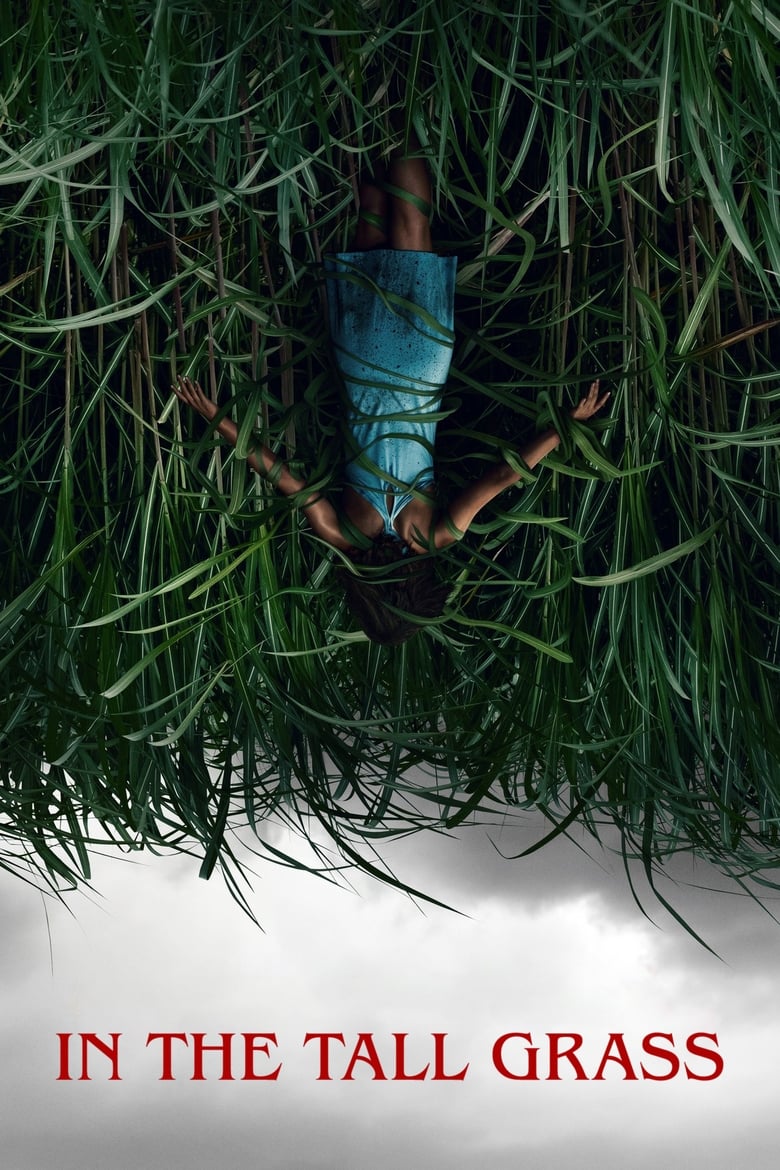

Becky DeMuth is six months pregnant when she and her brother Cal stop beside a tall field in Kansas. They hear a boy named Tobin calling for help and enter the grass to find him. The siblings soon lose each other, and the field bends distance, time, and death around them. Becky’s former boyfriend Travis and Tobin’s family also become trapped. The film has a grim, bloody, and confusing horror tone.
Becky is traveling to meet a family that may adopt her baby, while Travis regrets first asking her to end the pregnancy. The field turns family guilt, loss, and fear into a repeating nightmare. A black rock promises knowledge and escape, but it turns people into servants of the grass. Becky chooses her baby and helps Tobin break the cycle. The ending centers on family duty, sacrifice, and survival.
Community feedback
Was our 12% Woke rating accurate?
Loading review details…
Breakdown
These are the editorial factors and ratings behind our score for In the Tall Grass.
Woke representation / casting
Becky and Cal are played by Laysla De Oliveira and Avery Whitted, giving the lead family a visibly mixed-race pairing. The story gives their identities no special meaning, and the marketing does not present them as a representation statement. The modern road-trip setting makes the pairing believable, so the casting signal stays small.
15%
Woke political dialogue
Not present. No activist speeches, institutional critiques, or social commentary of any kind; all dialogue supports horror tension and character survival.
0%
Identity-driven story themes
Not present. Themes stay on supernatural entrapment, time distortion, family protection, guilt, and an ancient evil force with zero connection to race, gender, sexuality, or modern identity politics.
0%
Western institutional / cultural critique
Not present. An abandoned church and mysterious rock form part of the eerie backdrop but receive no framing as oppressive patriarchy, toxic masculinity, or failed Western institutions.
0%
Woke character or canon changes
Not relevant. The film adapts the King and Hill novella faithfully with only minor feature-length expansions; no identity swaps or DEI-driven alterations.
0%
Anti-woke backlash and complaints
Not present. No right-leaning or anti-woke complaints exist about DEI messaging or identity politics; all public discussion centers on horror quality and adaptation fidelity.
0%
Creator track record context
Stephen King has a mild liberal record and has publicly criticized Donald Trump. Joe Hill and Vincenzo Natali mainly have horror and science-fiction careers without a strong activist pattern. Natali’s interviews describe this film through family, reproduction, death, religion, and nature rather than identity politics. The other listed producers and casting crew add no clear activist signal.
18%
Production
Movie · 2023
Still reeling from the tragic death of their mother, a teenage girl and her younger sister find themselves plagued by a sadistic presence in their house and struggle to get their…
Movie · 2016
Lorraine and Ed Warren travel to north London to help a single mother raising four children alone in a house plagued by malicious spirits.

Movie · 2016
Rebecca must unlock the terror behind her little brother's experiences that once tested her sanity, bringing her face to face with a supernatural spirit attached to their mother.
Movie · 2020
Six friends hire a medium to hold a séance via Zoom during lockdown — but they get far more than they bargained for as things quickly go wrong.
Movie · 2016
In 1967 Los Angeles, a widowed mother and her two daughters add a new stunt to bolster their séance scam business and unwittingly invite authentic evil into their home.
Movie · 2024
A boy and his stepmother fear for their safety after an eerie creature resembling the boy's recently deceased father visits them.
Movie · 2022
Trapped on her family’s isolated farm, Pearl must tend to her ailing father under the bitter and overbearing watch of her devout mother.

Movie · 2024
Five years after surviving Art the Clown's Halloween massacre, Sienna and Jonathan are still struggling to rebuild their shattered lives.
