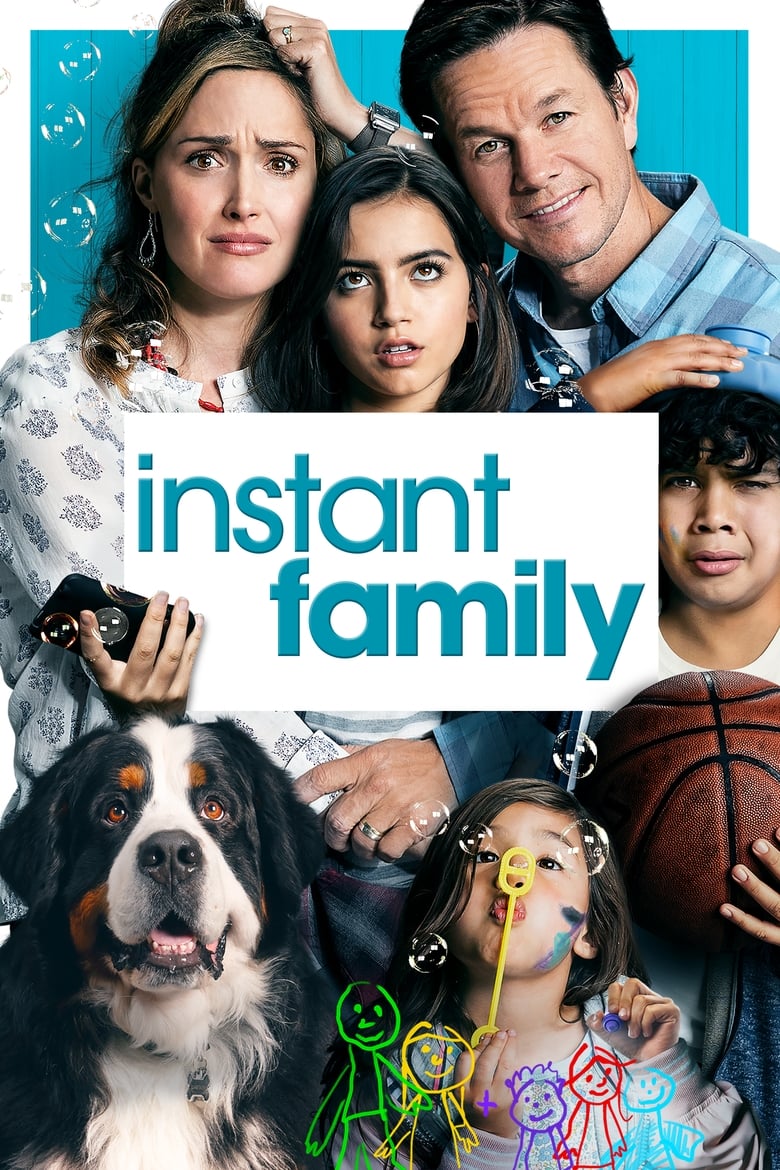

Pete and Ellie Wagner are a married couple who remodel homes and want to start a family. They enter foster-care training and hope to adopt one young child. After meeting Lizzy and her two younger siblings, they take all three children into their home. The comedy-drama follows their struggle with trauma, court rules, birth-family worries, and the hard work of becoming parents. The film includes a visibly diverse foster-parent class with a gay couple, a religious couple, and a single mother. Pete and Ellie also adopt three Latino siblings, and the movie briefly discusses white-savior worries and transracial adoption. These points support a mild representation message, but they do not control the main story. The main message supports marriage, family life, adoption, and staying committed when parenting becomes difficult.
Community feedback
Was our 34% Woke rating accurate?
Loading review details…
Breakdown
These are the editorial factors and ratings behind our score for Instant Family.
Woke representation / casting
The foster-parent class shows several family types, including a gay couple, a religious couple, and a single mother. The movie presents these families as valid ways to care for children. The three Latino siblings also make race visible in the central family story. The choices fit a modern foster-care setting, so the representation message is noticeable but limited.
32%
Woke political dialogue
Pete names concerns about white people becoming saviors when they foster Hispanic children. Karen answers that children should not be rejected because of race and asks critics how many children they have adopted. The training scenes also joke about people choosing children for the wrong reasons. The dialogue is brief and often played for comedy.
28%
Identity-driven story themes
The film makes transracial adoption part of Pete and Ellie’s learning process. The foster-parent group also treats gay, religious, single, and married adults as possible parents. These ideas support an inclusive view of family. Foster care, sibling loyalty, trauma, and parenthood remain more important than identity politics.
33%
Western institutional / cultural critique
Not present. The movie shows foster-care rules, court decisions, and reunification pressure as difficult parts of the system. It does not turn those problems into a broad attack on Western culture, Christianity, marriage, or traditional family life.
0%
Woke character or canon changes
Not relevant. The film is an original story based partly on Sean Anders’s real family experience. It does not change established characters, a known story, or real historical figures for identity reasons.
0%
Anti-woke backlash and complaints
A few faith-based reviews criticized the gay couple and the film’s treatment of different family structures. Those complaints were limited to small or specialist outlets. The wider reaction was mostly positive or mixed, and the X research pass found no anti-woke complaints. No boycott or large campaign was found.
18%
Creator track record context
Sean Anders and John Morris are mainly linked to commercial comedy and family films. Anders has spoken about his own foster-care experience and about encouraging people to help children in care. The stored creator records show no strong pattern of activist, identity-driven, or political filmmaking.
8%
Production
Movie · 2017
Brigsby Bear Adventures is a children's TV show produced for an audience of one: James. When the show abruptly ends, James's life changes forever, and he sets out to finish the…
Movie · 2019
Ten fishermen from Cornwall are signed by Universal Records and achieve a top ten hit with their debut album of Sea Shanties.

Movie · 2025
Lily Trevino unexpectedly befriends an online stranger who shares her self-centered father’s name. This new Bob Trevino’s support could transform her life.

Movie · 2023
The true story of how Dave Fishwick, a working class man and self-made millionaire, fought to set up a community bank so that he could help the local businesses of Burnley not…

Movie · 2023
Allison's life falls apart following her involvement in a fatal accident. The unlikely relationship she forms with her would-be father-in-law helps her live a life worth living.

Movie · 2022
Two lifelong friends find themselves at an impasse when one abruptly ends their relationship, with alarming consequences for both of them.
Movie · 2020
Scott has been a case of arrested development ever since his firefighter father died when he was seven. He's now reached his mid-20s having achieved little, chasing a dream of…

Movie · 2016
A boy growing up in Dublin during the 1980s escapes his strained family life by starting a band to impress the mysterious girl he likes.
