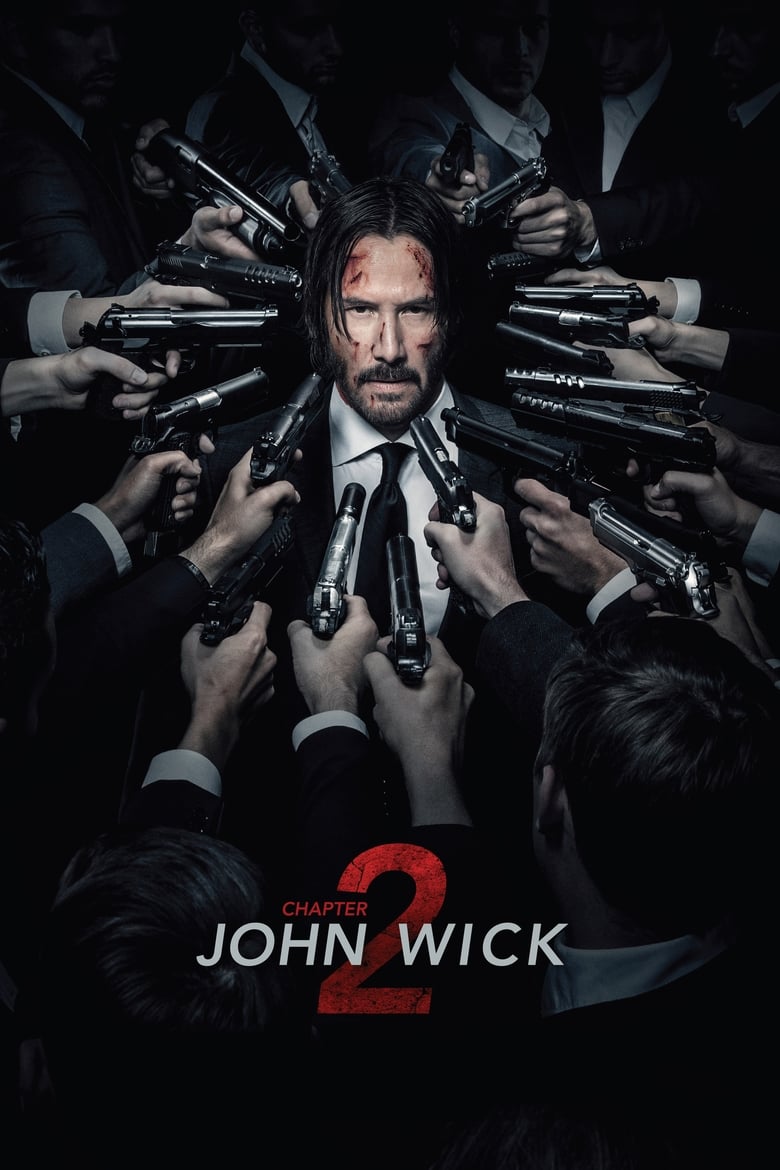

John Wick is a retired hitman who hopes to live quietly with his new dog. Santino D’Antonio calls in an old blood oath and forces Wick to kill Santino’s sister, Gianna, in Rome. The job draws Wick into the international assassin guild, where contracts, debts, and strict rules control its members. Santino then puts a bounty on Wick, sending killers after him as Wick fights back toward New York. The film has a dark tone and long, violent gun and hand-to-hand fights. Gianna leads a powerful crime family and holds a seat on the High Table. Ares is Santino’s non-speaking bodyguard and assassin, and she communicates with Wick through sign language. The film gives these two supporting women leadership and fighting roles often filled by men in action stories. Their roles add a small gender-role signal, while Wick’s revenge, loyalty, personal honor, and struggle to leave violence behind drive the story.
Community feedback
Was our 14% Woke rating accurate?
Loading review details…
Breakdown
These are the editorial factors and ratings behind our score for John Wick: Chapter 2.
Woke representation / casting
Ares is a non-speaking assassin who uses sign language to communicate. The film gives her a recurring role as Santino’s bodyguard. Her signing stays visible during exchanges with Wick.
3%
Woke political dialogue
Not present. The dialogue focuses on the blood oath, contracts, and immediate survival.
0%
Identity-driven story themes
Gianna leads the Camorra and holds a seat on the High Table. Ares fights Wick as Santino’s trained killer. The film gives these supporting women leadership and combat roles often filled by men in action stories.
18%
Western institutional / cultural critique
Not present. The conflict stays within the assassin guild and its criminal rules.
0%
Woke character or canon changes
Not relevant. Original story continuation with no alterations to established source material, canon characters, or historical figures.
0%
Anti-woke backlash and complaints
Not present. No documented right-leaning or anti-woke complaints accusing the film of DEI, identity politics, or left-wing messaging. Reception treated it as straightforward action entertainment.
0%
Creator track record context
Director Chad Stahelski produced an adaptation of Calexit, a story about California resisting a Trump-like president’s mass-deportation order. That project adds a mild political signal to his creative history. Stahelski said Chapter 2’s diverse casting was not a diversity mandate and that he avoids racial checkboxes.
20%
Production
Movie · 2023
With the price on his head ever increasing, John Wick uncovers a path to defeating The High Table. But before he can earn his freedom, Wick must face off against a new enemy with…
Movie · 2020
A reformed hunter becomes involved in a deadly game of cat and mouse when he and the local sheriff set out to track a vicious killer who may have kidnapped his daughter years ago.

Movie · 2025
An unexploded WWII bomb is discovered on a busy construction site in the centre of London. Chaos ensues as the military and police begin a mass evacuation against a ticking clock.
Movie · 2019
The chilling true story of a newly married FBI poster boy assigned to an Appalachian mountain town in Kentucky.
Movie · 2017
Quan is a humble London businessman whose long-buried past erupts in a revenge-fueled vendetta when the only person left for him to love – his teenage daughter – dies in an Irish…
Movie · 2026
After a criminal network kidnaps Wang Wei's daughter and the corrupt police refuse to assist him, Wei sets out on his own to locate her.
Movie · 2019
While on a prison furlough, a lowly criminal evades his guards and returns to his old stomping ground to take revenge on the people who turned him into a cold blooded killer.
Movie · 2016
A troubled veteran gets a chance at redemption by protecting a girl from an assassin after she witnesses a murder.
