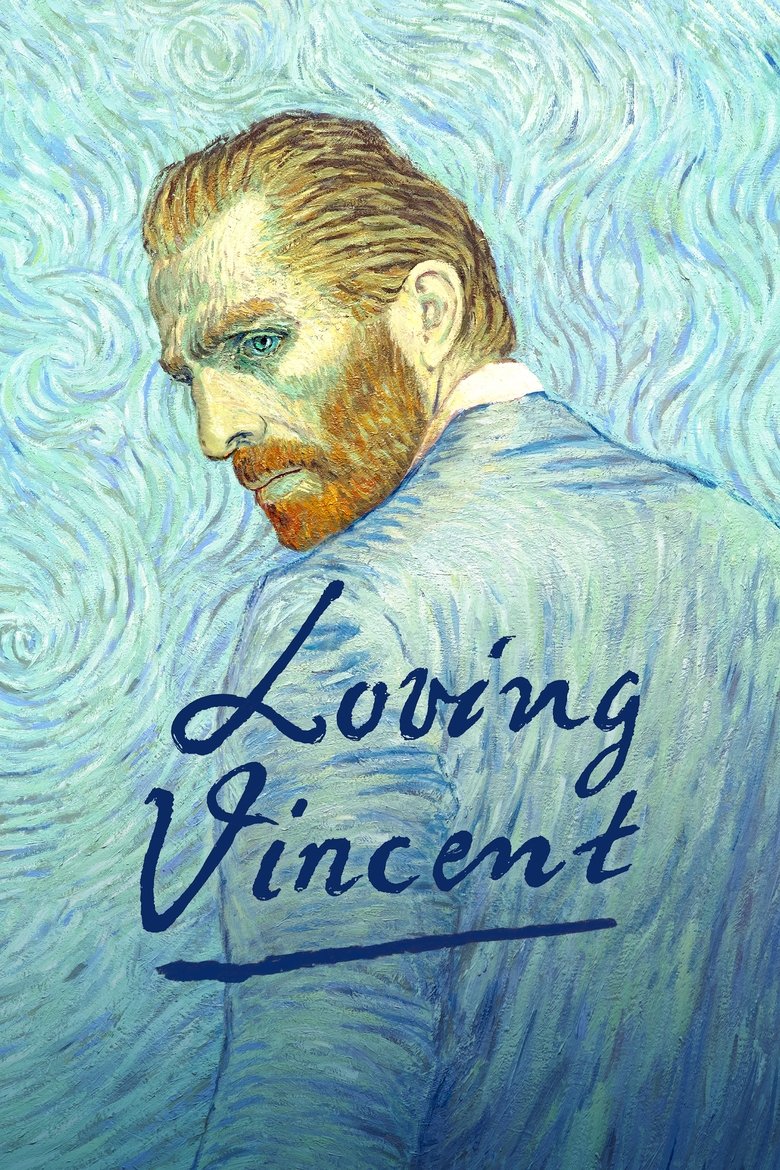

One year after Vincent van Gogh dies in 1890, postman Joseph Roulin asks his son Armand to deliver Vincent’s last letter to his brother, Theo. Armand reaches Paris and learns Theo has also died, so he travels to Auvers, where Vincent spent his final days. He questions Vincent’s doctor, the innkeeper’s daughter, his housekeeper, and other people who knew him. Each person remembers Vincent differently, and Armand tries to learn what led to Vincent’s death. The film has a quiet, sad mood and tells much of its story through moving oil-painted images. The story focuses on Vincent’s loneliness, poor health, work, and close bond with Theo. Armand starts out annoyed by Vincent, but the people he meets help him understand the painter’s lonely life. Some witnesses think Vincent took his own life, while others suggest that someone else caused his death. Art, family ties, grief, and mental illness shape the story.
Community feedback
Was our 4% Woke rating accurate?
Loading review details…
Breakdown
These are the editorial factors and ratings behind our score for Loving Vincent.
Woke representation / casting
Not present. The directors said they chose actors partly because they resembled people in Van Gogh’s portraits.
0%
Woke political dialogue
Not present. Characters talk about Vincent’s art, health, and death.
0%
Identity-driven story themes
Not present. Armand follows accounts of Vincent’s final days and tries to understand his life.
0%
Western institutional / cultural critique
Not present. The story shows personal disputes over Vincent’s care and death.
0%
Woke character or canon changes
Not relevant. The story uses documented history and Van Gogh’s own paintings and letters with no identity-driven swaps or reinterpretations.
0%
Anti-woke backlash and complaints
Not present. Online discussion focused on the painted images, Van Gogh’s story, and the Oscar result.
0%
Creator track record context
Director DK Welchman discussed gender bias in animation while speaking about this film. She said the crew’s 60% female makeup came from the strength of the applicants. Writer Jacek Dehnel has supported LGBT rights and opposed anti-LGBT policies in Poland.
18%
Production

Movie · 2024
Popular, outgoing Fujino is celebrated by her classmates for her funny comics in the class newspaper. One day, her teacher asks her to share the space with Kyomoto, a truant…
Movie · 2024
In 1985, the murder of a government-sponsored superhero draws his outlawed colleagues out of retirement and into a mystery that threatens to upend their personal lives and the…

Movie · 2020
Tanjiro Kamado, joined with Inosuke Hashibira, a boy raised by boars who wears a boar's head, and Zenitsu Agatsuma, a scared boy who reveals his true power when he sleeps, boards…
Movie · 2019
The summer of his high school freshman year, Hodaka runs away from his remote island home to Tokyo, and quickly finds himself pushed to his financial and personal limits.
Movie · 2016
After being brutally murdered in a subway station, a teen boy awakens to find himself resurrected by a strange computer named Gantz, and forced to fight a large force of invading…

Movie · 2019
When a hulking monster arrives on Earth and begins a mindless rampage, the Justice League is quickly called in to stop it.
Movie · 2025
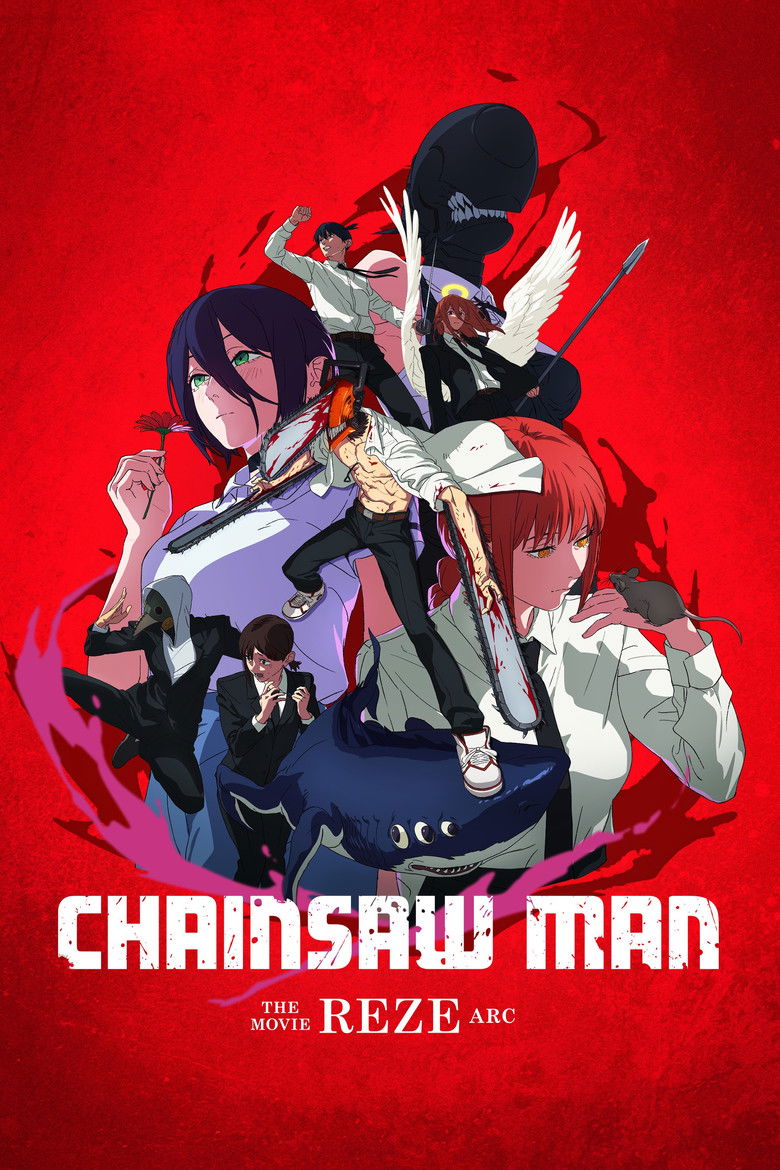
In a brutal war between devils, hunters, and secret enemies, a mysterious girl named Reze has stepped into Denji's world, and he faces his deadliest battle yet, fueled by love in…

Movie · 2025
After a catastrophic event leaves their bodies destroyed, Ne Zha and Ao Bing are granted a fragile second chance at life.
