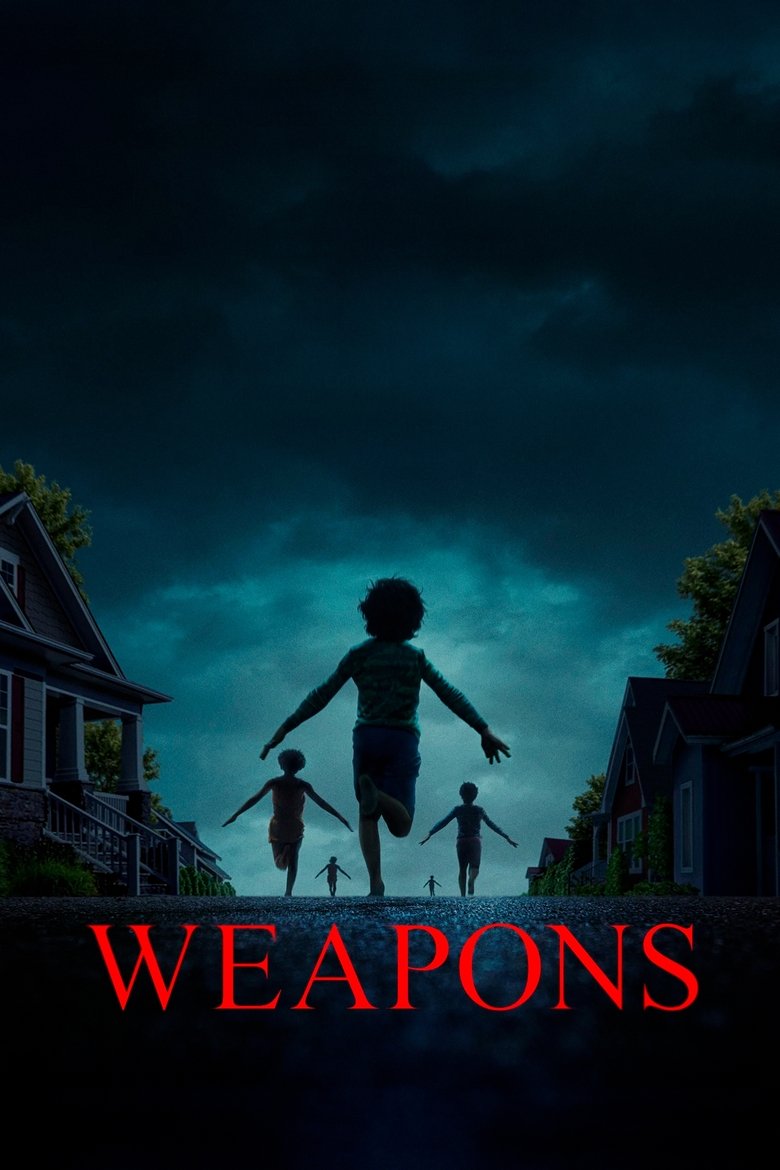

In Maybrook, seventeen children from Justine Gandy's class run out of their homes at 2:17 a.m. and disappear. Alex is the only child who stays behind, and the town blames Justine while the families search for answers. The story moves among Justine, grieving father Archer, police officer Paul, principal Marcus, and other residents. Their search leads into a violent supernatural horror story about grief, fear, addiction, and people being controlled. Marcus lives with his husband Terry, and the film gives them a short scene as an ordinary married couple at home. Gladys later controls Marcus and makes him attack Terry, turning their home into part of the horror plot. Archer dreams of a giant assault rifle hanging over the town. Viewers may read the image as a comment on gun violence, while the film's main conflict follows Gladys's control of the missing children and adults.
Community feedback
Was our 24% Woke rating accurate?
Loading review details…
Breakdown
These are the editorial factors and ratings behind our score for Weapons.
Woke representation / casting
Principal Marcus is a major supporting character, and the film shows his home life with his husband, Terry. Marcus is Asian American, and Terry is white, making them an interracial gay couple. Actor Clayton Farris described them as queer characters living ordinary, happy lives.
18%
Woke political dialogue
Not present. Characters talk about the vanished children, their fears, and Gladys's attacks.
0%
Identity-driven story themes
Marcus and Terry appear as a married gay couple in a short home scene. Their relationship is part of Marcus's story when Gladys visits their house. Gladys then controls Marcus and makes him attack Terry.
17%
Western institutional / cultural critique
Archer dreams of a giant AR-15 above his house while children remain missing. News coverage and viewers have read the image as a school-shooting reference. Cregger says he did not write the film as a school-shooting story, but leaves the image open to political readings.
10%
Woke character or canon changes
Not relevant. The movie is an original story written by Zach Cregger and is not based on any pre-existing books, real historical figures, or legacy material.
0%
Anti-woke backlash and complaints
One small X account called the movie an anti-gun-rights social-justice film. The account's post received one like and no replies. The complaint stayed on a small account.
8%
Creator track record context
Director Zach Cregger has a catalog score of 28, while listed producer scores range from 22 to 52. Producer J.D. Lifshitz has spoken in favor of representation and support for directors from varied backgrounds. Lifshitz and Raphael Margules have worked on films about Indigenous identity and women's stories.
36%
Production
Movie · 2026
The host of a popular paranormal podcast becomes haunted by terrifying recordings mysteriously sent her way.
Movie · 2017
After a mysterious global crisis, a young girl is left alone to hide from a malevolent power that stalks her home.
Movie · 2026
The young daughter of a journalist disappears into the desert without a trace—eight years later, the broken family is shocked when she is returned to them, as what should be a…
Movie · 2026
When James receives a mysterious letter from his lost love Mary, he is drawn to Silent Hill—a once-familiar town now consumed by darkness.
Movie · 2022
After witnessing a bizarre, traumatic incident involving a patient, Dr. Rose Cotter starts experiencing frightening occurrences that she can't explain.
Movie · 2017
A young man and his three younger siblings are plagued by a sinister presence in the sprawling manor in which they live.

Movie · 2019
A lone fisherman on his daily run finds himself lost in a thick fog which proves impossible to navigate. The worst is yet to come when his encounter with a seemingly abandoned…
Movie · 2022
When Keira Woods' daughter mysteriously vanishes in the cellar of their new house in the country, she soon discovers there is an ancient and powerful entity controlling their home…
