
2026 · Based on 1 season, 8 episodes through May 25, 2026 ·
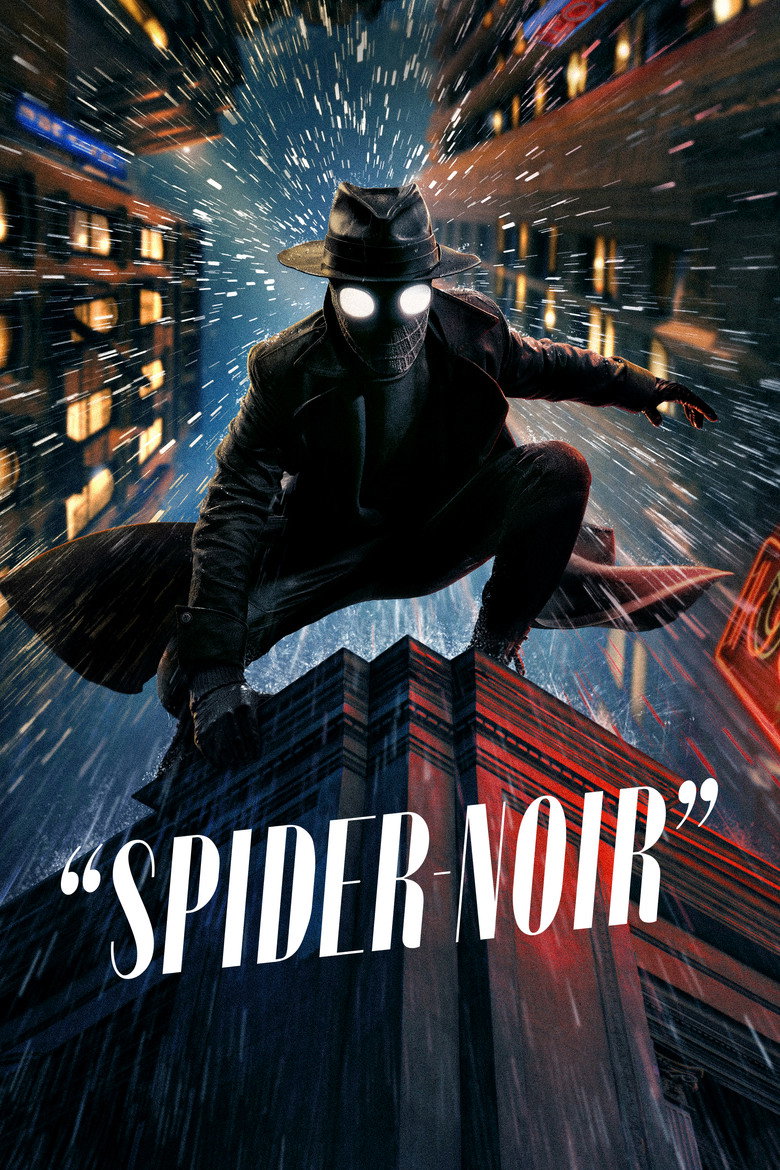
Spider-Noir follows Ben Reilly, an aging private detective in 1930s New York. Ben once protected the city as The Spider, but grief, guilt, and damage from war pushed him into bitter retirement. A case involving Cat Hardy, mob violence, secret experiments, and super-powered criminals brings Ben back into danger. The show combines crime mystery, dry humor, superhero action, and classic film noir style. The season gives Janet Ruiz, Cat Hardy, Robbie Robertson, and Lonnie Lincoln repeated story importance. Janet often shows greater skill than Ben, while Cat rejects men who try to control her. The season includes visible discussions about racism, male power, women's choices, and military abuse, but these ideas remain part of a larger story about crime, loss, duty, and Ben's return to heroism. The woke elements matter because they shape several characters and subplots, yet they do not replace the main crime and redemption story.
Community feedback
Was our 45% Woke rating accurate?
Loading review details…
Breakdown
These are the editorial factors and ratings behind our score for Spider-Noir.
Woke representation / casting
The series places Black, Asian, and Latina characters in several visible supporting roles in 1930s New York. Robbie Robertson and Lonnie Lincoln receive major story importance. Cat Hardy and Janet Ruiz also have roles that go beyond the background. Janet's prominent position makes the pattern more noticeable, but the show does not present the cast as an open diversity campaign.
25%
Woke political dialogue
The characters repeatedly discuss men controlling women, racist treatment, and unequal social power. Robbie gives a direct speech about risking his life for white men. Cat argues against men deciding what she should do. These lines appear within crime and period drama scenes, but they recur often enough to be noticeable.
27%
Identity-driven story themes
Janet repeatedly proves more capable than Ben and becomes his equal partner. Cat makes major choices and later stops the final attack on the main villain. Robbie and Lonnie receive story importance tied to race, war service, and social position. These ideas form a meaningful subplot, while crime, grief, duty, and redemption remain the larger story.
41%
Western institutional / cultural critique
The season presents male entitlement and control of women as repeated sources of harm. The mayor uses his power to pressure a woman. Mob men treat women as possessions. The military is also described as deeply corrupt and abusive. These points partly reflect the period setting, but the repeated focus on male behavior gives the critique a modern activist edge.
20%
Woke character or canon changes
Cat Hardy is a new version of the Felicia Hardy idea, and Li Jun Li plays her. Lonnie Lincoln is also adapted into this version of Tombstone. These identity changes support the noir setting. The changes remain part of the wider crime story rather than replacing it.
16%
Anti-woke backlash and complaints
X users repeatedly complained about "men bad" ideas, the strong secretary, diverse 1930s roles, and Lonnie's race change. The complaints appeared across several accounts. One culture account had notable reach. The reaction did not become an organized campaign, review-bombing effort, or major news story.
22%
Creator track record context
Most key writers, producers, and directors mainly work in action, crime, comedy, and genre projects. Harry Bradbeer has a repeated history of female-led and feminist work. Pavlina Hatoupis has worked on several identity-focused projects. The full creative group does not show a strong activist pattern.
22%
Production
TV Show · 2026
When an unidentified body is found in a luxury apartment linked to Oliver Kennedy and his girlfriend Ciara Wyse, Detectives Lee Reardon and Karl Connolly reconstruct the couple's…

TV Show · 2017
Inspired by actual events, this true crime anthology series takes a deep dive into the dark, twisted minds of terrorists and follows the brave souls who hunt them down.
TV Show · 2020
Grace and Jonathan Fraser are living the only lives they ever wanted. Overnight a chasm opens in their lives: a violent death and a chain of terrible revelations.
TV Show · 2022
Lucy wakes every night at exactly 3:33am. Nothing in her life has made sense for a long time. But the answers are out there, somewhere, at the end of a trail of brutal murders.
TV Show · 2021
A detective in a small Pennsylvania town investigates a local murder while trying to keep her life from falling apart.
TV Show · 2021
When family man Nick Brewer is abducted in a crime with a sinister online twist, those closest to him race to uncover who is behind it and why.
TV Show · 2026
Frances Neagley is a private investigator in Chicago and former military colleague of Jack Reacher in the Army's 110th Special Investigations Unit.

TV Show · 2020
Zoe Walker leaves her quiet life behind to investigate her brother's disappearance in Ibiza, where she quickly heads down a decadent and dangerous path.
