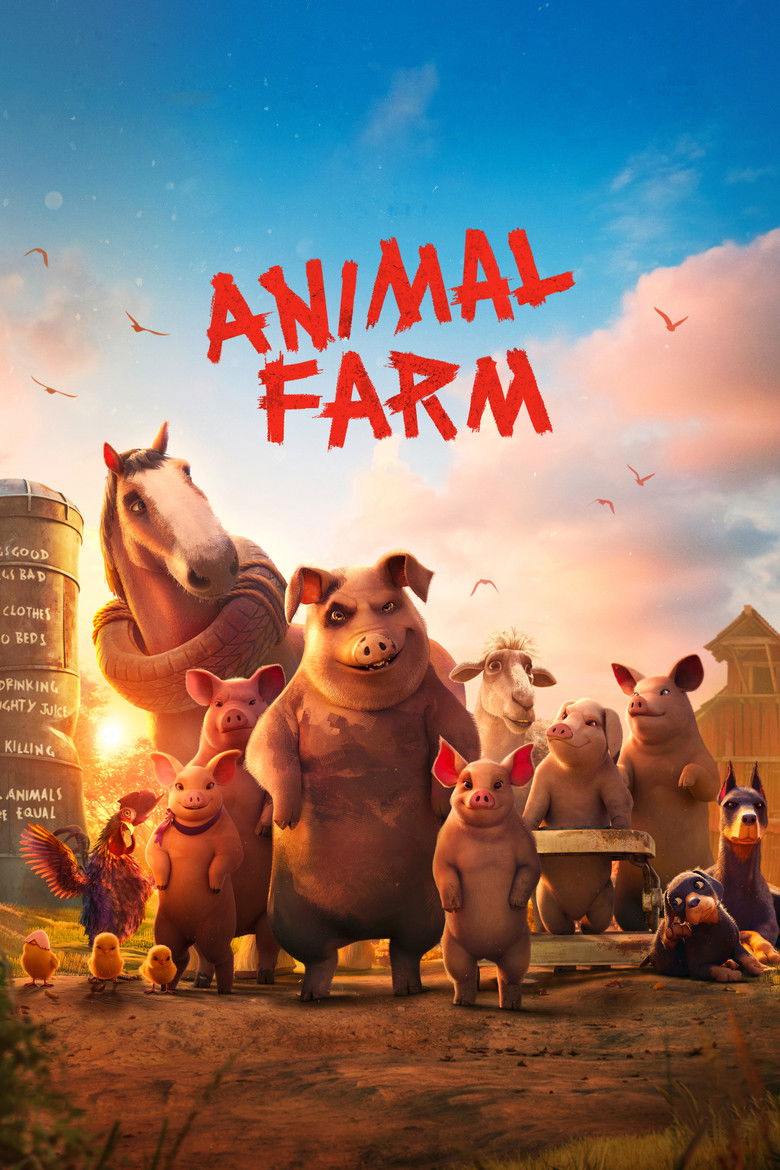

The film follows Lucky, a young pig who grows up after farm animals defeat their cruel owner. The animals hope to build a free and equal farm. Napoleon and the pigs seize control, rewrite the truth, and crush anyone who resists. The tone mixes political warning with bright comedy, fart jokes, action, and a hopeful ending. The film changes Orwell’s message by making modern capitalism and corporate greed the main threat. A billionaire human villain helps the pigs and wants the farm for profit. The story also gives Snowball a larger female role and turns Lucky into the hero of a rescue mission. These changes are central to the film’s plot and ending, but there is no confirmed queer story or identity-centered message.
Community feedback
Was our 81% Woke rating accurate?
Loading review details…
Breakdown
These are the editorial factors and ratings behind our score for Animal Farm.
Woke representation / casting
Snowball is changed into a prominent female rival to Napoleon, and Laverne Cox voices the role. The film also uses a visibly varied celebrity voice cast. The marketing found in the searches does not frame this casting as a diversity campaign.
25%
Woke political dialogue
The film repeatedly attacks corporate power, consumer culture, and profit seeking. The animals visit a mall, and Napoleon urges them to buy everything. The story uses these ideas across major scenes, not just one short joke.
42%
Identity-driven story themes
Not present. The film does not center race, sexuality, gender identity, or another identity group. The female role changes support the plot but are not presented as an identity campaign.
0%
Western institutional / cultural critique
The film makes capitalism, billionaires, private business, and corporate profit major threats. Freida Pilkington wants the land for money and works with the pigs. The story treats collective action as the answer and gives the animals a hopeful win over both leaders and business power.
65%
Woke character or canon changes
The film changes Orwell’s central political meaning by moving the main blame from communist tyranny toward capitalism and corporate greed. The film adds Lucky and Freida Pilkington, changes Snowball into a female character, and replaces the bleak ending with a heroic victory. These changes affect the main story and its message.
82%
Anti-woke backlash and complaints
Large accounts and repeated posts called the film a “woke Animal Farm” and accused it of making capitalism the villain. The complaint spread through X, trailer coverage, and national entertainment and news outlets.
70%
Creator track record context
Nicholas Stoller has a stored score of 55 because of his strong queer-representation work. Andy Serkis has a stored score of 30 and has discussed updating the story for modern families. The wider creative team has mostly low or moderate stored scores, so the title’s content provides the stronger evidence.
43%
Production

Movie · 2017
Based on the bestselling book series, this outrageous comedy tells the story of George and Harold, two overly imaginative pranksters who hypnotize their principal into thinking…

Movie · 2022
Marcel is an adorable one-inch-tall shell who ekes out a colorful existence with his grandmother Connie and their pet lint, Alan.
Movie · 2018
Taking place during the events of Incredibles 2, Edna Mode babysits Jack-Jack.
Movie · 2025
The world is a perplexing, peaceful mystery to Amélie until a miraculous encounter with chocolate ignites her wild sense of curiosity.

Movie · 2025
Elio, a space fanatic with an active imagination, finds himself on a cosmic misadventure where he must form new bonds with eccentric alien lifeforms, navigate a crisis of…

Movie · 2020
Phineas and Ferb travel across the galaxy to rescue their older sister Candace, who has been abducted by aliens and taken to a utopia in a far-off planet, free of her pesky little…

Movie · 2016
Set after the events of Continental Drift, Scrat's epic pursuit of his elusive acorn catapults him outside of Earth, where he accidentally sets off a series of cosmic events that…

Movie · 2017
A story about how a new baby's arrival impacts a family, told from the point of view of a delightfully unreliable narrator, a wildly imaginative 7 year old named Tim.
