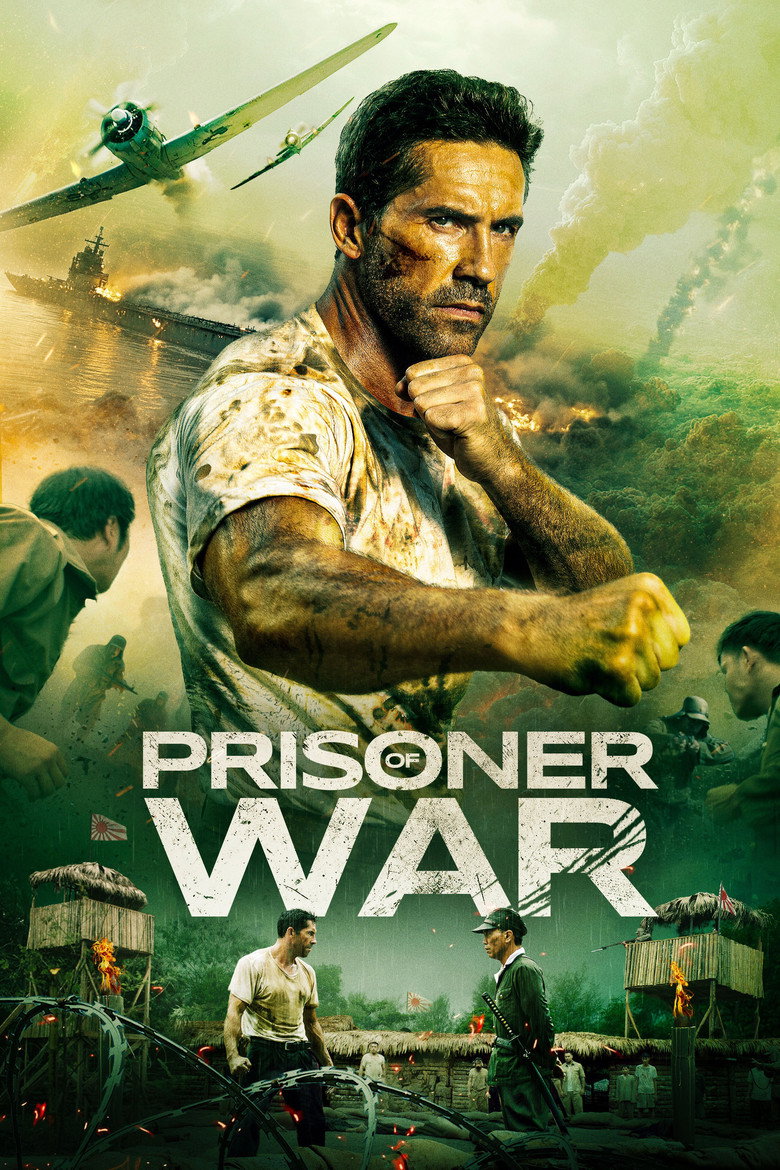

British RAF Wing Commander James Wright is captured by Japanese forces during World War II. He is taken to a prison camp in the Philippines, where the camp leader forces prisoners to fight for entertainment. Wright uses his martial arts training to survive and help other prisoners resist. The movie has a harsh action tone with many hand-to-hand fights. The movie focuses on survival, courage, loyalty, and escape. Wright is shown as a strong fighter who leads a group of American prisoners. The Japanese camp leader is cruel and abuses his power. The story does not center on modern identity politics, gender issues, or activist causes. A Filipina nurse has a small supporting role, but the movie remains focused on the war story and Wright’s fights.
Community feedback
Was our 7% Woke rating accurate?
Loading review details…
Breakdown
These are the editorial factors and ratings behind our score for Prisoner of War.
Woke representation / casting
Not present. The main roles fit the World War II setting, and no diversity-first casting message was found.
0%
Woke political dialogue
Not present in this title.
0%
Identity-driven story themes
The movie gives Wright a leading role and shows him as the main skilled fighter. This is a normal action-movie setup rather than a repeated gender or identity message. The story focuses on war, survival, and escape.
5%
Western institutional / cultural critique
Not present. The movie shows abuse by a Japanese prison-camp leader, but that is a historical war conflict rather than modern activist criticism of Western culture or institutions.
0%
Woke character or canon changes
Not relevant. The movie is an original World War II action story and does not make a known identity-based change to an established character or source.
0%
Anti-woke backlash and complaints
Not present. No meaningful anti-woke complaint was found. Public reviews and online posts focused on the action, story quality, and Scott Adkins.
0%
Creator track record context
Erik Matti has a moderate record of political and social criticism, including work about corruption and state power. His stored score is 35, but those themes are not mainly DEI or identity-based. Scott Adkins and the other key creators have little recorded activist context.
18%
Production
Movie · 2019
While on a prison furlough, a lowly criminal evades his guards and returns to his old stomping ground to take revenge on the people who turned him into a cold blooded killer.

Movie · 2016
A young man washes ashore, his memory gone - but his past comes back to haunt him after he is nursed back to health and his killing ability is needed when he takes on a powerful…
Movie · 2026
As rival gangs, corrupt officials and a ruthless Major Iqbal close in, Hamza's mission for his country spirals into a bloody personal war where the line between patriot and…
Movie · 2026
After a criminal network kidnaps Wang Wei's daughter and the corrupt police refuse to assist him, Wei sets out on his own to locate her.
Movie · 2023
During the war in Afghanistan, a local interpreter risks his own life to carry an injured sergeant across miles of grueling terrain.
Movie · 2021
Hutch Mansell, a suburban dad, overlooked husband, nothing neighbor — a "nobody." When two thieves break into his home one night, Hutch's unknown long-simmering rage is ignited…

Movie · 2025
Levon Cade left behind a decorated military career in the black ops to live a simple life working construction.
Movie · 2017
After working as a drug courier and getting into a brutal shootout with police, a former boxer finds himself at the mercy of his enemies as they force him to instigate violent…
