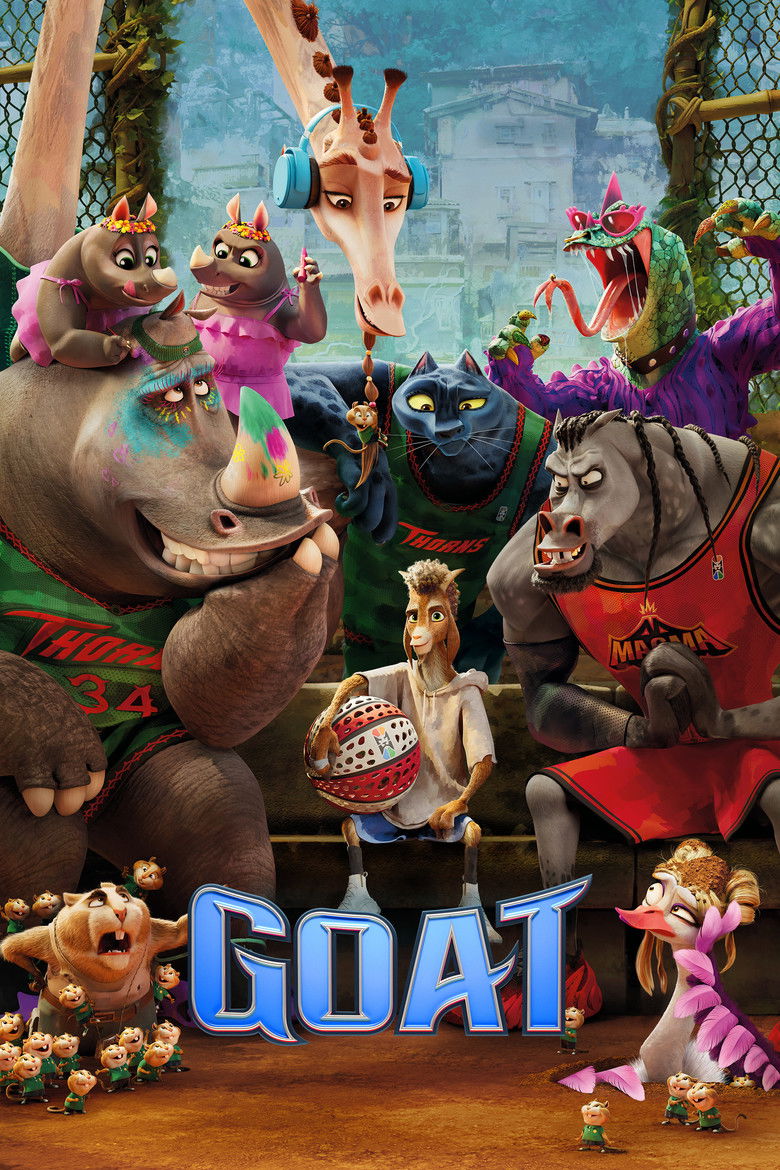

GOAT follows Will Harris, a small goat who dreams of playing roarball, a rough, basketball-like pro sport. After a video of him draws attention, the Vineland Thorns give him a spot on their team. The much larger players doubt him, and star Jett Fillmore resents having to share the court. Will works to earn the team’s trust while the Thorns try to save their season and home. The film gives women a clear place in its sports world. The league is co-ed, and Jett is its top player and Will’s childhood hero. His dream of growing up like her is part of his story from the start, but the film does not build a political speech around it. The main lessons are that small players can succeed and that a team works better when its members share the ball. Jett also has to move from playing for herself to trusting her teammates.
Community feedback
Was our 34% Woke rating accurate?
Loading review details…
Breakdown
These are the editorial factors and ratings behind our score for GOAT.
Woke representation / casting
The co-ed league puts male and female animals in the same full-contact pro sport. Jett is the league’s leading star, and Will has looked up to her since childhood. Director Tyree Dillihay said the pairing was a fresh choice, and Stephen Curry said girls should see women in positions of power. Women’s success is a clear part of the film’s sports world, though the main plot is still about size and teamwork.
36%
Woke political dialogue
Will says as a child that he wants to grow up to be like Jett. At the end, he repeats that she inspired him. These lines support a boy looking up to a woman, but they do not use activist or identity terms. The film has no recurring political speeches.
10%
Identity-driven story themes
Will’s female sports hero is a steady part of his story from childhood to his final speech. The co-ed league also treats women and men as equal players. The larger story focuses on Will proving that small animals can play and on Jett learning to trust her team.
23%
Western institutional / cultural critique
Not present. There is no critique of traditional Western institutions, gender roles, or the nuclear family. The movie showcases a positive family dynamic with Will honoring his late mother and being supported by his grandma and family. The corporate owner antagonist acts out of standard, silly cartoon greed, which is a common sports trope rather than an anti-capitalist sermon.
0%
Woke character or canon changes
Not relevant. There are no audience-visible changes to established characters, canon, or real history. The film is loosely inspired by Chris Tougas's unpublished concept book Funky Dunks, meaning the filmmakers created this animal world, the characters, and the sport of roarball from the ground up.
0%
Anti-woke backlash and complaints
One small X account called the film “DEI trash” without getting likes, replies, or wider pickup. A separate small account urged a boycott because Stephen Curry had criticized ICE, not because of the film’s story. A Reddit comment also called the female hero and co-ed league “woke,” but no broad complaint or major news coverage appeared.
8%
Creator track record context
stored creator summaries show some inclusion-focused work from producers Michelle Raimo Kouyate, Erick Peyton, and Rodney Rothman. Aaron Buchsbaum’s strongest identity-related work was the TV series Fairfax. Director Tyree Dillihay’s record is mostly animation work, with little public activist messaging. Those signals provide some context but do not define the whole team.
39%
Production
Movie · 2019
A selfish postman and a reclusive toymaker form an unlikely friendship, delivering joy to a cold, dark town that desperately needs it.
Movie · 2024
Teenager Riley's mind headquarters is undergoing a sudden demolition to make room for something entirely unexpected: new Emotions!

Movie · 2019
Max the terrier must cope with some major life changes when his owner gets married and has a baby. When the family takes a trip to the countryside, nervous Max has numerous…
Movie · 2023
Jaded 74-year-old lizard Leo has been stuck in the same Florida classroom for decades with his terrarium-mate turtle.

Movie · 2023
A magical meteor crash lands in Adventure City and gives the PAW Patrol pups superpowers, transforming them into The Mighty Pups.

Movie · 2024
Garfield, the world-famous, Monday-hating, lasagna-loving indoor cat, is about to have a wild outdoor adventure!
Movie · 2016
The Minions need to raise $20 to purchase an as seen on TV banana blender. So they take up lawn mowing at an old folks home, with hilarious antics!
Movie · 2016
An island populated entirely by happy, flightless birds or almost entirely. In this paradise, Red, a bird with a temper problem, speedy Chuck, and the volatile Bomb have always…
