
TV Show review
Kids · Sci-Fi · Fantasy · Animation · Action · Adventure · Family
2023–2025 · Based on 2 seasons through March 8, 2025 ·
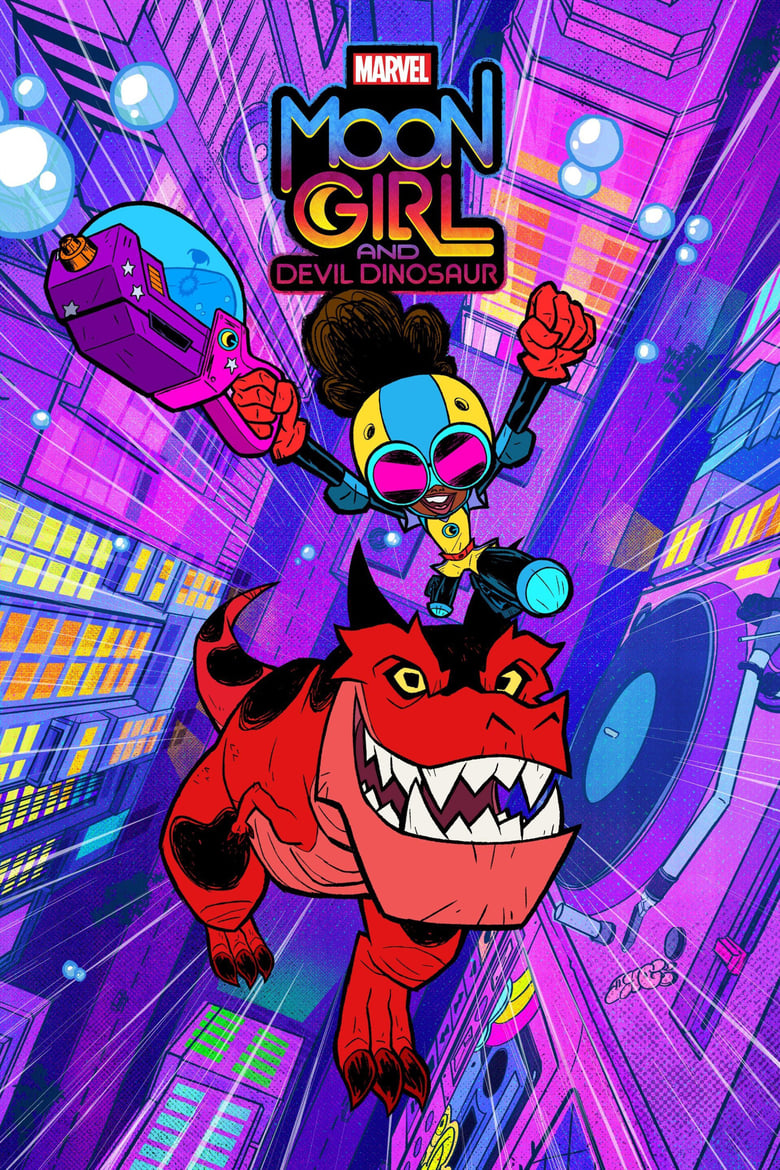
Thirteen-year-old Lunella Lafayette is a super-genius who lives in New York City's Lower East Side. She brings a ten-ton dinosaur named Devil Dinosaur into the present by accident. The pair protect their neighborhood while Lunella balances school, family, friendship, and secret superhero work. The tone is bright, funny, musical, and fast-paced. The show makes a black girl the smartest and most important hero in nearly every story. It repeatedly presents girls and minority characters as leaders, inventors, fighters, and community protectors. Several episodes support acceptance of different families and identities, while the unaired “The Gatekeeper” was planned around a transgender girl facing unfair treatment. The message is usually tied to friendship, fairness, confidence, and helping people who feel excluded.
Community feedback
Was our 88% Woke rating accurate?
Loading review details…
Breakdown
These are the editorial factors and ratings behind our score for Marvel's Moon Girl and Devil Dinosaur.
Woke representation / casting
The show places a black girl at the center as the lead hero, top scientist, and main problem-solver. The main group also gives major roles to several girls and minority characters. The series presents this broad representation as a key part of its identity through its cast, setting, and focus on black community life. The pattern is prominent across both seasons.
75%
Woke political dialogue
The characters sometimes use direct language about fairness, exclusion, identity, and standing up for people who are treated badly. The planned “The Gatekeeper” story makes transgender acceptance a clear subject, although that episode was not released in the United States. Most dialogue remains focused on superhero action, family, school, and friendship.
30%
Identity-driven story themes
The show repeatedly makes representation, Black pride, female achievement, and social inclusion part of its stories. Lunella is often shown as the smartest and most capable person in the room. The series also includes diverse families and a planned story about a transgender girl facing discrimination. These themes recur across the run and are important to the show's appeal.
68%
Western institutional / cultural critique
The show sometimes questions unfair rules, exclusion, school treatment, and adults who fail to understand young people. It supports community action and challenges narrow ideas about who can be a scientist or hero. It does not focus heavily on attacking Christianity, family life, or Western institutions.
28%
Woke character or canon changes
The series changes the comic's central hero from the original male Moon-Boy partnership to Lunella, a black girl who leads the story as Moon Girl. That identity and hero-role change is central to the adaptation. The change also serves the show's setting and plot, so the score remains moderate rather than high.
25%
Anti-woke backlash and complaints
Anti-woke viewers complained that the show was too political, too diverse, or focused too much on girl power and LGBTQ themes. The planned transgender story produced a named-outlet news cycle after Disney held the episode back. Anti-woke YouTube coverage also called the episode too woke. The reaction was real and widely discussed, but it did not become a sustained boycott or review-bombing campaign.
65%
Creator track record context
Several stored writers have a repeated history of supporting racial, gender, and cultural representation. Their past work includes diverse young heroes, anti-racism education, and stories made to help excluded groups see themselves on screen. The wider team also includes writers with ordinary family and adventure credits, so the record is strong but not completely activist-focused.
62%
Production
TV Show · 2016
With the fifth offshoot of the "Ben 10" franchise, the animated series returns to its roots and its original name, bringing 10-year-old Benjamin "Ben" Tennyson, his cousin Gwen…
TV Show · 2022
When an explosive battle with Dr. Eggman shatters the universe, Sonic races through parallel dimensions to reconnect with his friends and save the world.
TV Show · 2016
After uncovering a mysterious amulet, an average teen assumes an unlikely destiny and sets out to save two worlds.
TV Show · 2022
Journey into the lives of two distinctly different Jedi from the prequel era – Ahsoka Tano and Count Dooku. Each will be put to the test as they make choices that will define…
TV Show · 2017
Picking up immediately following the events in the feature film, these are the continuing adventures and friendship of 14-year-old tech genius Hiro and his compassionate…
TV Show · 2018
The Boss Baby brings his big brother Tim to the office to teach him the art of business in this animated series sprung from the hit film.
TV Show · 2021
Two very different families join forces to create a new community, an us-against-the-world, cave person co-op on the most amazing farm in the history of prehistory!
TV Show · 2022
Follow the adventures of Po, who partners up with a no-nonsense English knight named Wandering Blade to find a collection of four powerful weapons before a mysterious pair of…
